

Bouteille de Plaisir: Memory-Making German Bubbles
Bouteille de Plaisir: an alcohol-free Württemberg sparkler and an organic Rheinhessen Riesling sekt, with a marker in the gift box for dating the cork.
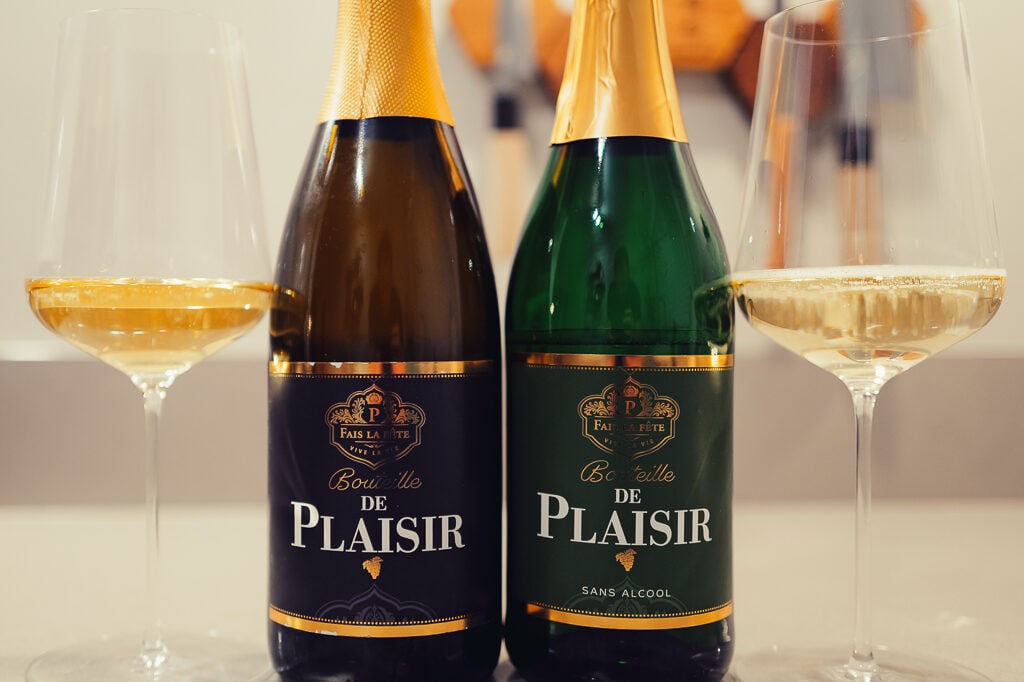
The cork reads 31-1, the last day of Dry January. Pascal Noordover is a wine importer, and under his private label Bouteille de Plaisir he sells two sparkling wines from Germany: an alcohol-free cuvée from Württemberg and an organic Riesling sekt from Rheinhessen. The gift box comes with a marker so the cork can carry a date.
The cork idea
The idea came from Irene, a marketer Pascal knows through a business network. She once visited a company with a wall of corks, each with a date on it: a big client landed, an anniversary celebrated. Together they wondered whether you could put that into a bottle.
“The moment you uncork a bottle of sparkling wine passes quickly,” Pascal says. “But you’re making a memory right then.”
The alcohol-free: Württemberg
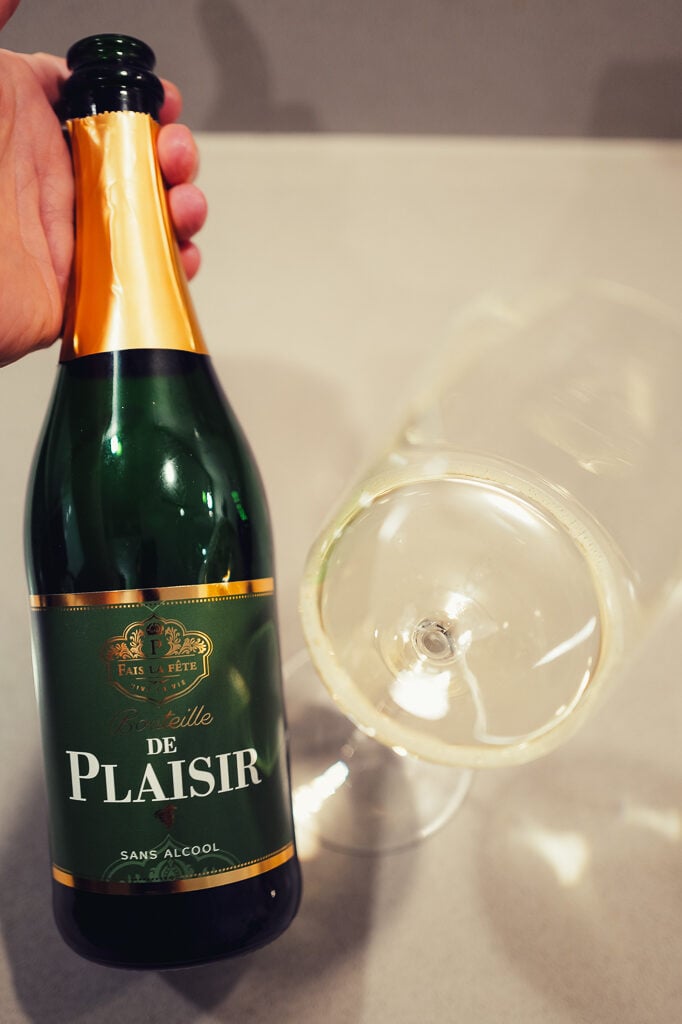
A dealcoholised cuvée of Muscaris, Cabernet Blanc and Müller-Thurgau. The first two are PIWI varieties, relatively new grapes bred to stand up to fungal disease. According to Pascal, the family estate is not certified organic but farms sustainably and wants to hand its vineyards on in good shape to the next generation. He first tasted the wine at the winery, as a welcome drink, and decided to import it.
The fizz comes from added carbon dioxide. It foams up readily, the mousse settles fast and then it keeps a fine, steady stream of bubbles. On the nose we find fresh apple, close to the first bite of a Granny Smith, with lime, lemon zest, a bitter edge of grapefruit and something floral that recalls jasmine. The palate is fuller than you might expect, with a touch of sweetness that keeps the acidity in check. The tell-tale smell of dealcoholised wine barely shows; according to Pascal, people served it blind don’t immediately notice there is no alcohol in it.
Price: €19.99 (€27.50 in the gift box).
The Winzersekt: Rheinhessen
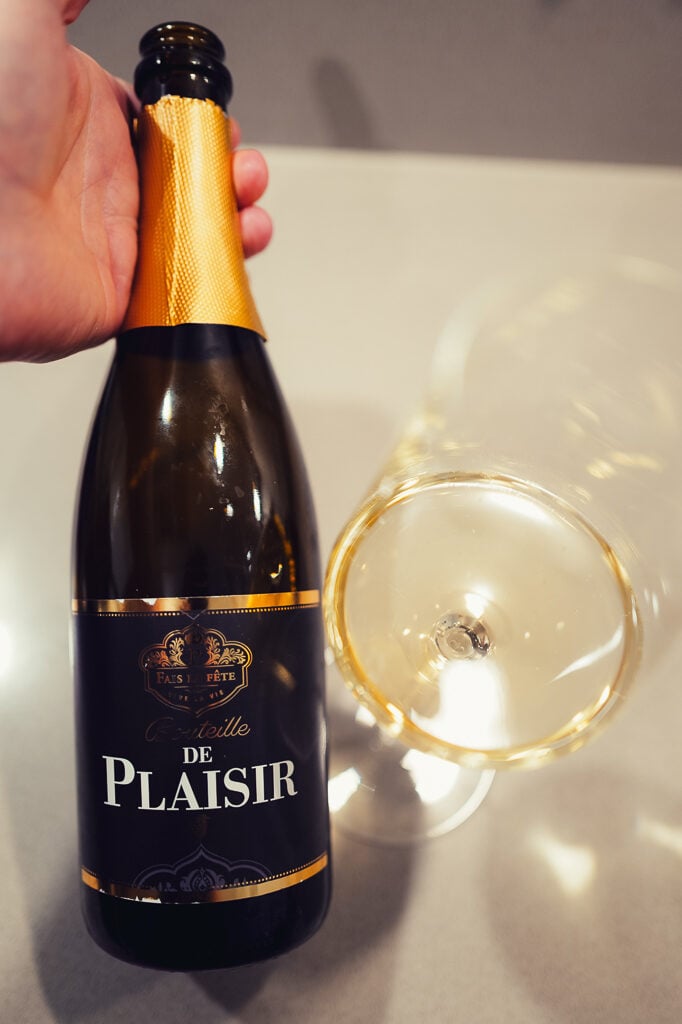
100% Riesling from an organic grower in Rheinhessen, traditional method with second fermentation in bottle. 12.5% alcohol and, according to Pascal, around 6 g/l residual sugar. Golden yellow, with an even finer mousse than the alcohol-free.
I get lots of honey first and a hint of butterscotch, then apple, fresh lime and a little pineapple. Pascal puts that richness down to the late, ripe picking many Rheinhessen growers favour. Even so, the wine is dry, with more acidity than the alcohol-free.
Price: €21.49 (€28.99 in the gift box).
The two side by side
Going back and forth, the sekt is tighter and more serious, the alcohol-free softer and more easy-going. In the sekt the bubbles sit within the wine itself; in the alcohol-free they seem to sit around it. There is little between them on price.
There are caveats. Pascal admits himself that the bottles are on the pricey side. The conversation also touches on alcohol-free wine still having ground to make up on quality, as alcohol-free beer did before it. Pascal imports and sells both bottles, so what he says about the winemakers is his account. And I tasted a single bottle of each.
For a birthday, a client win or a Dry January toast, you write the date on the cork and keep it.
Order at bouteilledeplaisir.nl.
Sources
- Sparks ep. 2, conversation with Pascal Noordover: vinovonk.com/en/sparks/bouteille-de-plaisir
- Bouteille de Plaisir web shop: bouteilledeplaisir.nl
More on Non-Alcoholic
Ron Gastrobar's alcohol-free wine list, minus the wine
The Ron Gastrobar alcohol-free wine list runs on tea and fermented drinks. Sommelier Jacob van Benthem explains why that beats dealcoholised wine.
Read on →
Non-Alcoholic Sparkling Tea, Rewritten by Kloss
Non-alcoholic sparkling tea from the Mosel: fermented celery, wild orchard apples, 0.0%. Five bottles from C. Kloss tasted, with pricing and where to buy.
Read on →
Drink Less, Drink Better: The No/Low Shift of 2026
Drinking less but better is a taste decision, not a diet. What the 2026 no/low numbers mean, and when alcohol-free actually holds up in the glass.
Read on →