

Established Sparkling Tea: A Serious Wine Alternative
Established Sparkling Tea from Amsterdam: two green teas, magnolia and added CO2 in a champagne bottle. Maarten Riebeek explains how it is made.

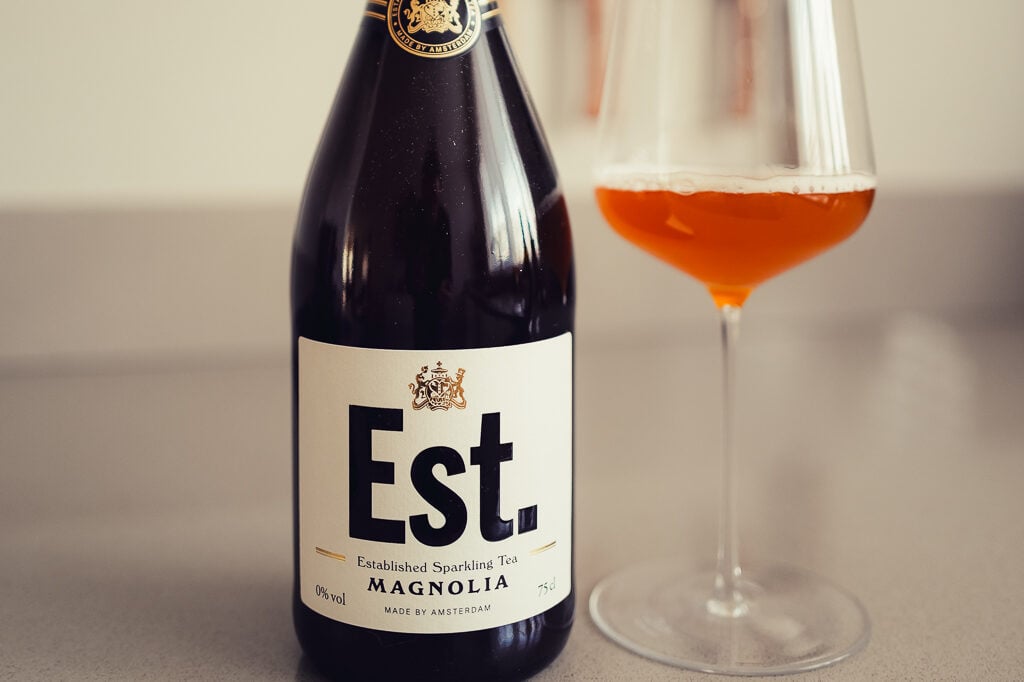
If you’re not drinking wine at restaurant Moon in the A’DAM Tower, Maarten Riebeek pours you tea with your food. Those pairings grew into Established, a sparkling tea, alcohol free and made without fermentation, sold in a champagne bottle. I had tasted it once and wanted to know how it’s made.
From kitchen to bottle
So I sat down with Maarten for Sparks by VinoVonk, my podcast on wine, spirits and innovative drinks.
For friends and guests, Maarten brewed teas to go with the dishes. One of the tower’s owners asked him why he wasn’t doing anything with it, and came in as a co-investor. Maarten started out with Wesley; the two of them make the tea, now with a larger group behind them.
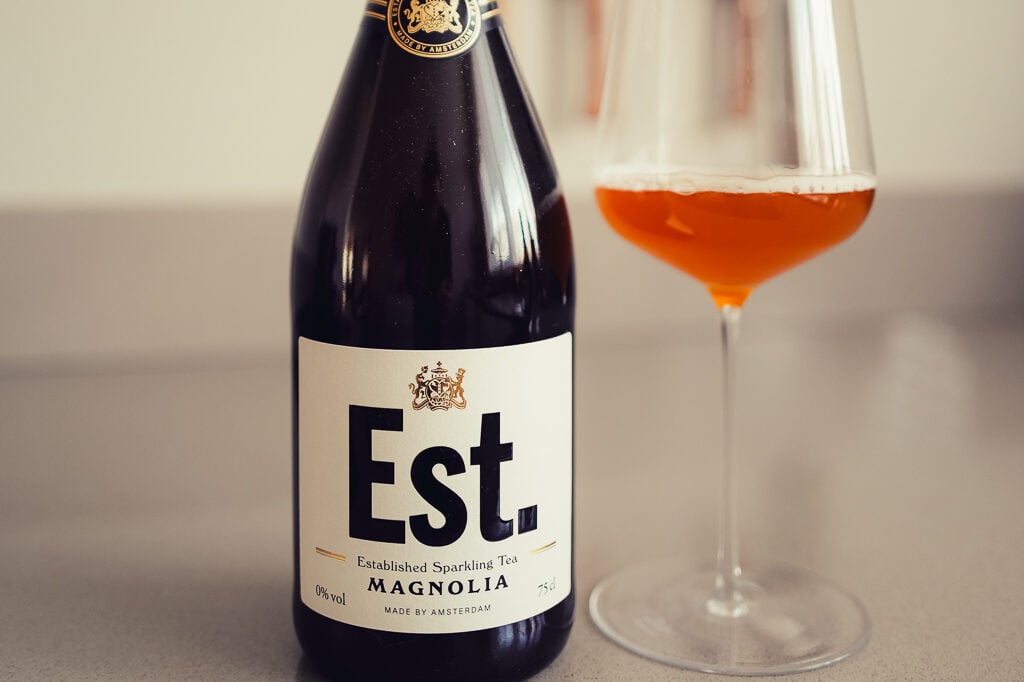
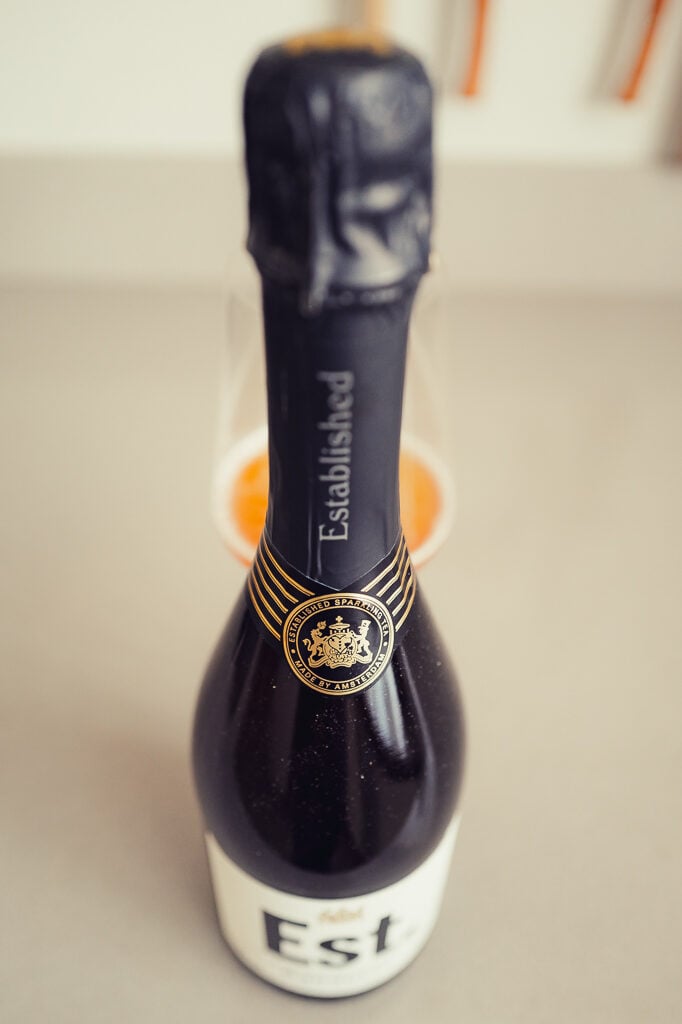
The champagne bottle with its gold wire cage is deliberate: when you celebrate, you want to hear a pop. The label, designed by the Stone Twins, is full of nods to Amsterdam, along with the Mad Hatter from Alice in Wonderland and a UFO with a cross on it.
The blend
The Magnolia has seven ingredients. Its base is two green teas: sencha from Japan and gunpowder from Hunan in China. According to Maarten, sencha gives the fresh, grassy start, and the rolled gunpowder follows with tannin and bitterness.
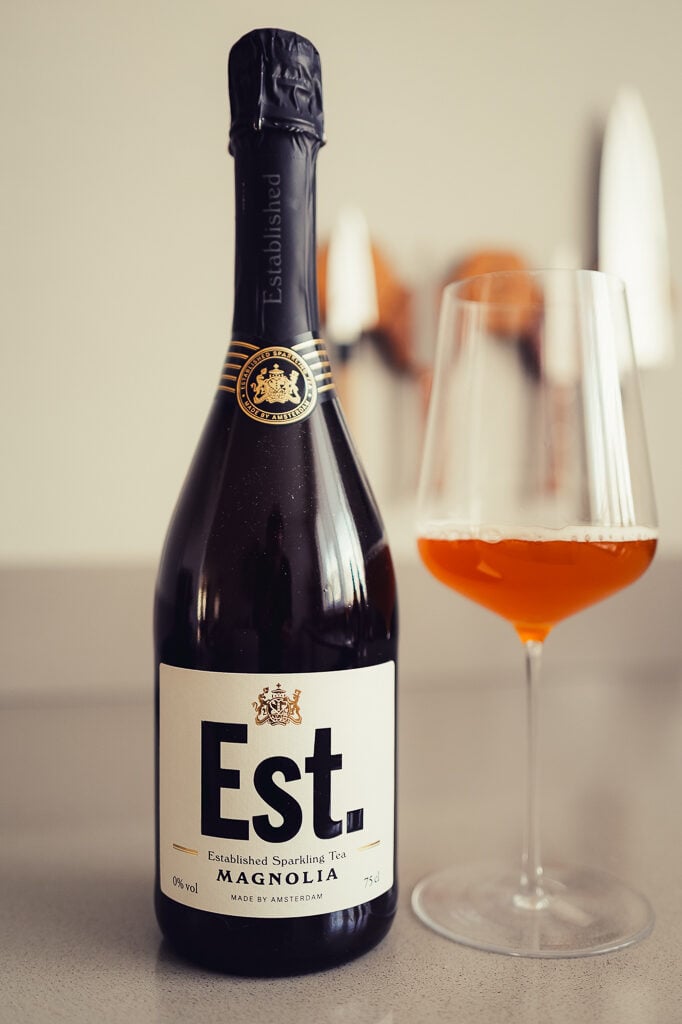
Magnolia leaf, verbena and juniper join them, along with a little agave syrup and a little lemon juice. There are no E-numbers.
Nothing is fermented; that would take it towards kombucha, with alcohol in it. The CO2 is added, for mouthfeel and for shelf life, at around six bar, similar to sparkling wine. So there has never been alcohol in it, and nothing has been taken out.
In the glass
We tasted from a Riedel champagne glass. What struck me straight away was how floral it is. The label says magnolia, but I picked up far more flowers than that, like walking through a wood in blossom in spring. It isn’t sweet, it is complex, and you smell and taste the tea.
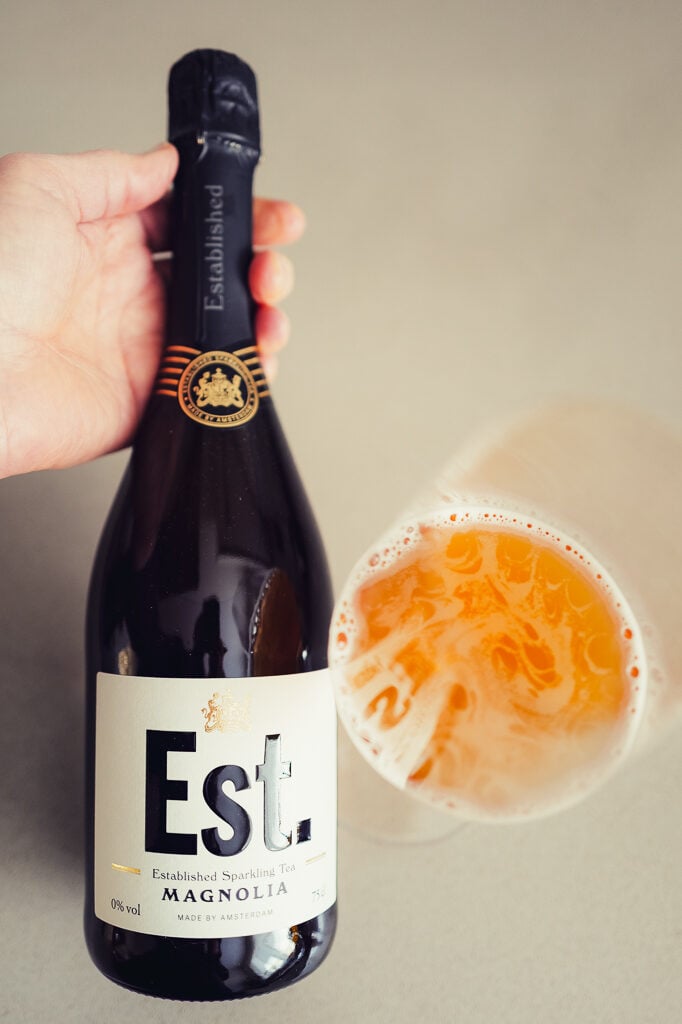
As the glass warmed up, the floral side came through even more. The label lists 15 kcal and 3.4 g of sugar per 100 ml. Maarten keeps the sugar as low as he can so the tea leads, but he needs some for mouthfeel, because alongside a dish the drink has to linger.
I’ve tasted other sparkling teas that reminded me of strong, cooled tea run through a SodaStream, with plenty of sugar to hide the bitterness. I didn’t find that here.
Price and availability
At the time of recording a bottle cost €23.95. A few shops in the Netherlands stocked it, including cheese affineur Betty Koster at L’Amuse, who has backed it from day one. Otherwise it was mostly found in restaurants. The trade orders through Hanos, and you can have it delivered at home via the Established website, also in a gift box.
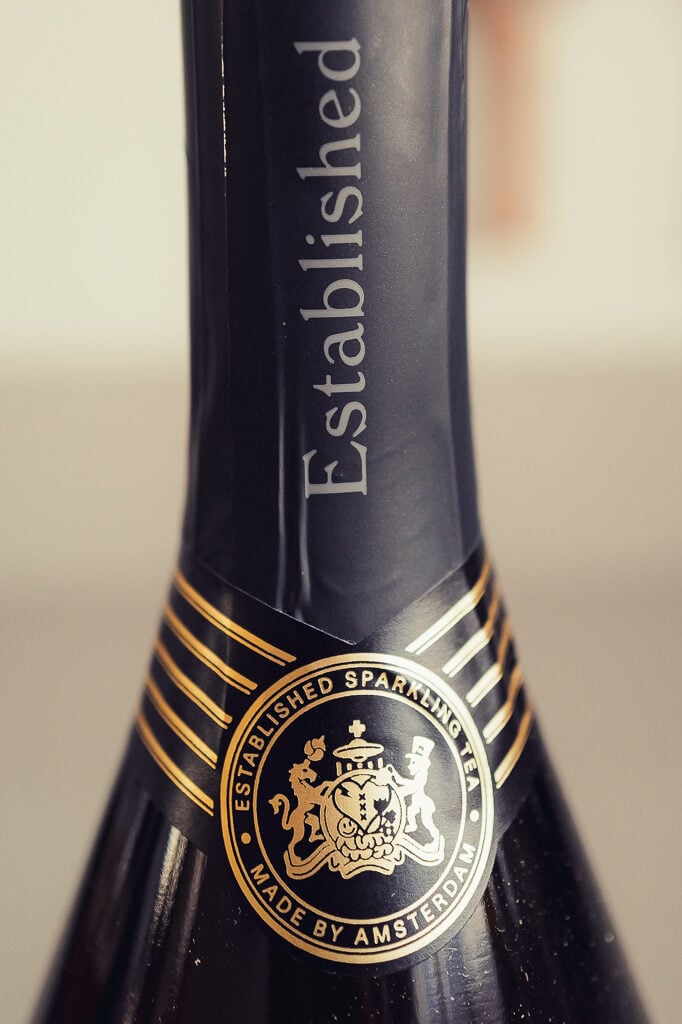
Maarten says restaurants often pour it as an aperitif, especially with oysters, and that it also works with chocolate. He also mentions that Master Sommelier Laurent Richet wrote up how the drink changes from one glass shape to another.
Caveats
I tasted one bottle, with the maker beside me, and the account of the blend is Maarten’s. Established had been on the market for less than a year when we recorded. Because there are no E-numbers it carries a best-before date, and the team is still testing how it develops in the bottle, with different batches kept in a cabinet. There is no lot number with a year on the bottle yet.
There was a single flavour, and if you wanted to drink it outside a restaurant, you had only a handful of places to buy it.
What comes next
Maarten dreams of a vintage sparkling tea, if ageing in bottle allows it. The next flavour, he says, won’t strictly be a tea, though it will still be a sparkling tea. His aim is for someone who doesn’t drink alcohol to join in at the table without standing out.
At the end of the recording I told listeners to try it at least once. I stand by that.
Prices in this article date from June 2025. Check the current price with the seller.
Sources
- Established Sparkling Tea (official, Amsterdam): establishedsparklingtea.com
More on Non-Alcoholic
Ron Gastrobar's alcohol-free wine list, minus the wine
The Ron Gastrobar alcohol-free wine list runs on tea and fermented drinks. Sommelier Jacob van Benthem explains why that beats dealcoholised wine.
Read on →
Non-Alcoholic Sparkling Tea, Rewritten by Kloss
Non-alcoholic sparkling tea from the Mosel: fermented celery, wild orchard apples, 0.0%. Five bottles from C. Kloss tasted, with pricing and where to buy.
Read on →
Drink Less, Drink Better: The No/Low Shift of 2026
Drinking less but better is a taste decision, not a diet. What the 2026 no/low numbers mean, and when alcohol-free actually holds up in the glass.
Read on →