

Pierre Goiset: Muscadet's Natural Wine Visionary
From behind the camera to behind the plow, Pierre Goiset's remarkable career change has brought fresh energy to the ancient soils of Muscadet.
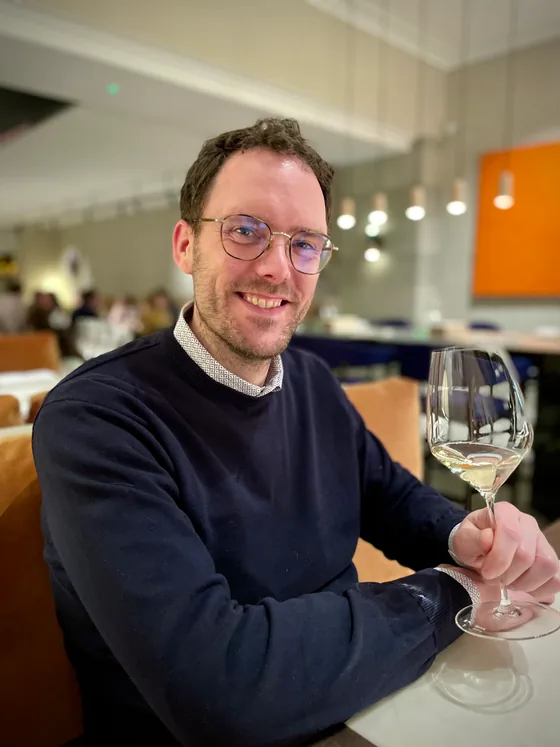
Pierre Goiset works his vineyard with a horse. Not for show, but because a tractor would compact the granite soils in Saint-Fiacre-sur-Maine. The former cameraman started his domain in 2021 on three hectares in the heart of Muscadet, and has since been making natural wines that argue, fairly persuasively, that Melon de Bourgogne is the most underrated grape in France.
Muscadet has spent decades trapped in a reputation problem. Cheap volume production dragged the appellation down, while the gneiss and granite soils along the Sèvre Nantaise hold potential to rival the best whites in the Loire. Goiset is part of a small group of growers reclaiming that potential, one bottle at a time.
The Winemaker and His Muscadet Domain
What drives someone to give up a stable career for the uncertainty of winemaking? For Goiset, it was the pull of tangible work and a direct connection to the land. His 3.1-hectare domain sits at the confluence of the Sèvre Nantaise and Maine, south of Nantes. He planted 2.6 hectares to Melon de Bourgogne and just over half a hectare to Merlot.
The estate is small, but the soils vary sharply. Each parcel speaks differently in the glass, and that diversity sits at the centre of Goiset’s approach.
Production stays deliberately small: roughly 4,500 bottles in his first 2021 vintage. At that scale Goiset knows every vine personally, and quality always beats yield.
Natural Viticulture and Geology of Distinction
The geology under Goiset’s parcels runs in distinct layers. Across Maisdon-sur-Sèvre, three soil types sit side by side: gneiss, orthogneiss with quartz, and granite. Each one leaves its own mineral fingerprint in the wine. The result is a natural laboratory for terroir expression, precisely because Goiset intervenes so little.
Goiset goes further than basic organic certification. He uses biodynamic preparations, treats his vines with herbal teas instead of synthetic chemicals, and works the soil with horses where possible. It costs more time, but it preserves the soil life and biodiversity he sees as a precondition for honest wine.
His background in image-making shows up on the labels: bold, abstract designs, each unique to its cuvée but tied together by a recognisable modern hand that mirrors the energy in the bottle.
The Wines: A Transparent Expression of Place
In the cellar, Goiset works naturally with a pragmatic floor. Indigenous yeasts handle fermentation, the wines stay unfiltered, and sulfur additions cap at 25 mg/L: well below even the strictest natural wine certifications. All wines age eleven months in neutral fiber tanks, with no oak influence.
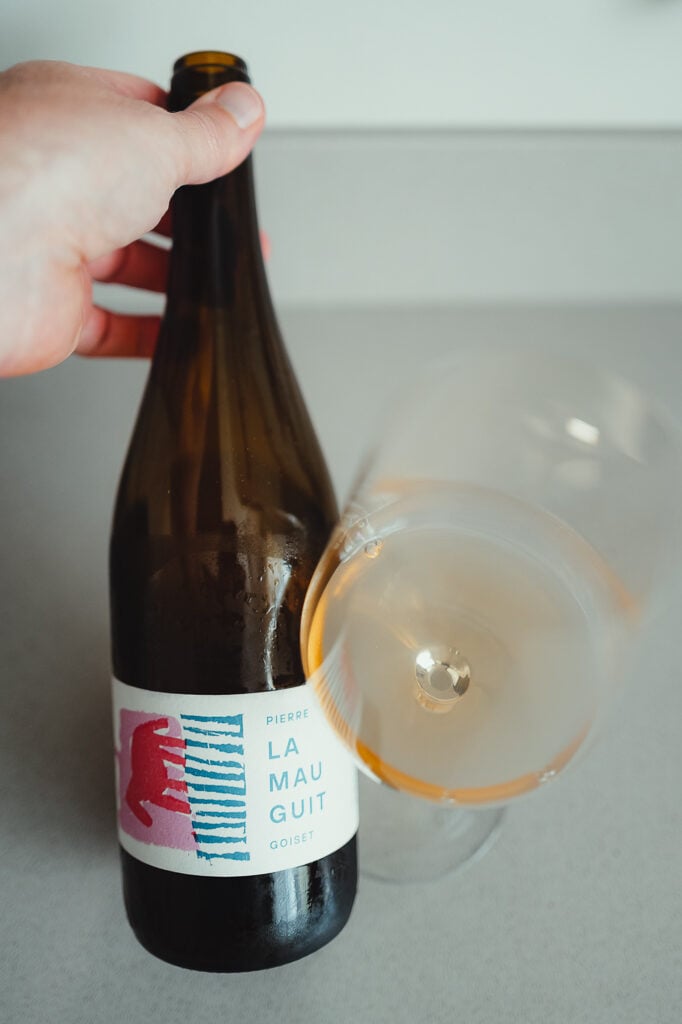
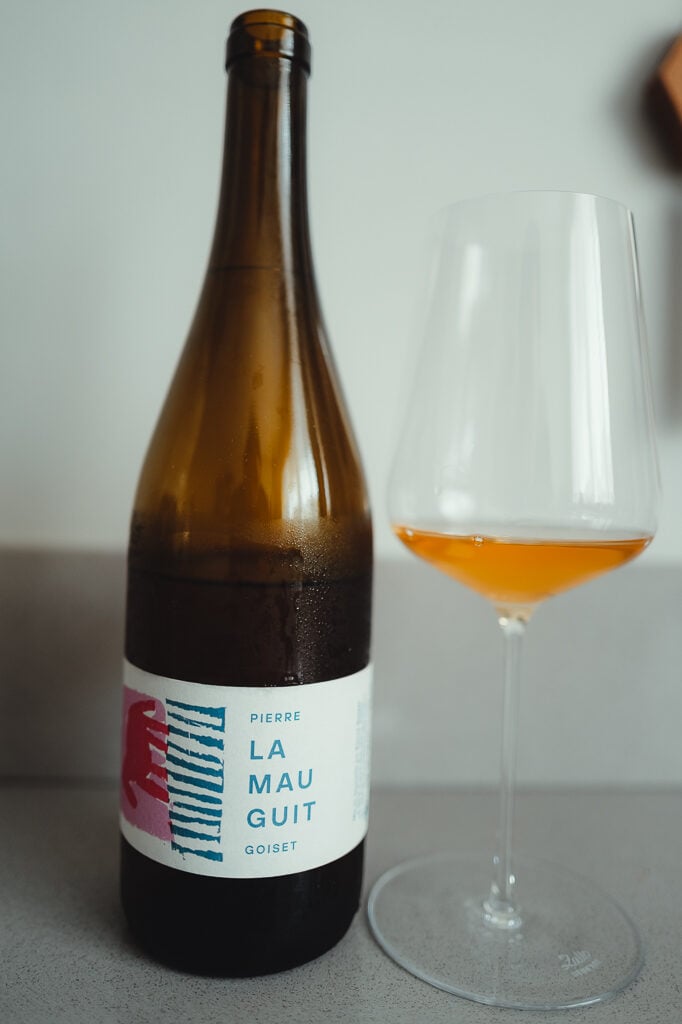
La Mauguit 2022 comes from Melon Blanc vines planted around 1950 on gneiss, orthogneiss, and quartz soils in the La Mauguitonnière parcel. The wine pours golden straw, strikingly clear despite being unfiltered. The label pairs red and blue stripes, a visual cue to the tension between fruit and minerality. After eleven months on the lees it lands on lemony freshness wrapped around a saline mineral spine, built for local seafood. At 12.5% alcohol it keeps the regional brightness intact while adding depth from the old vine fruit.
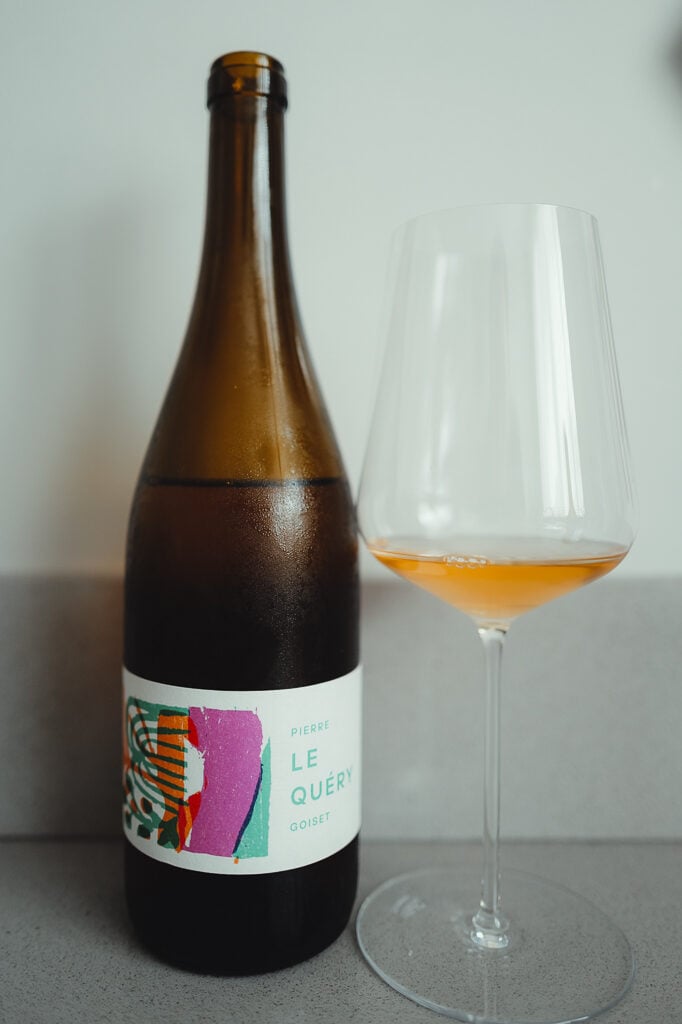
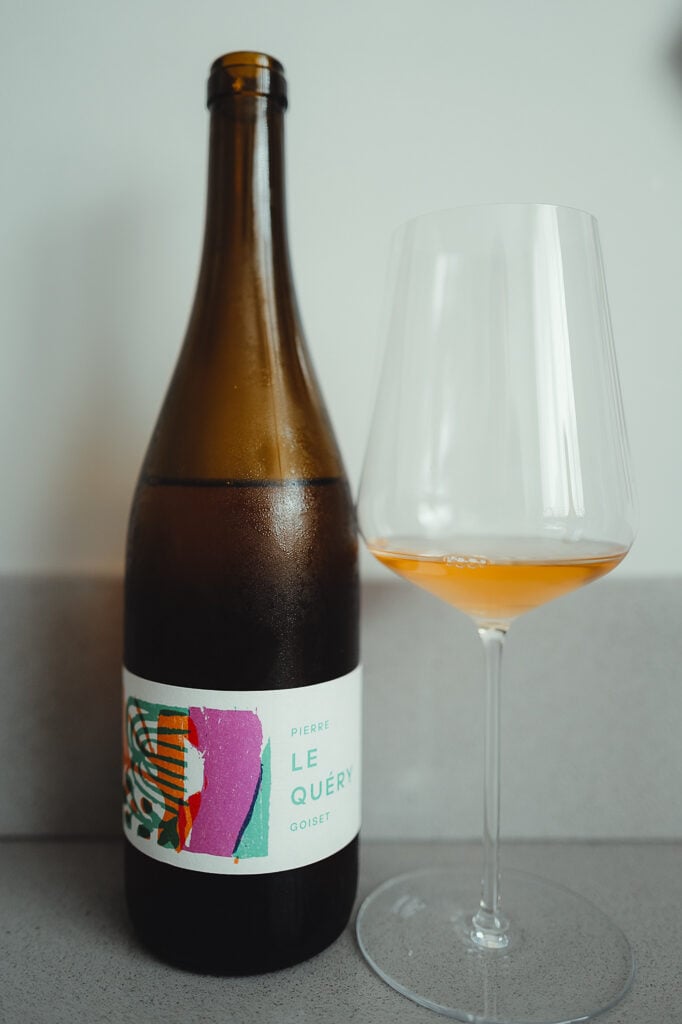
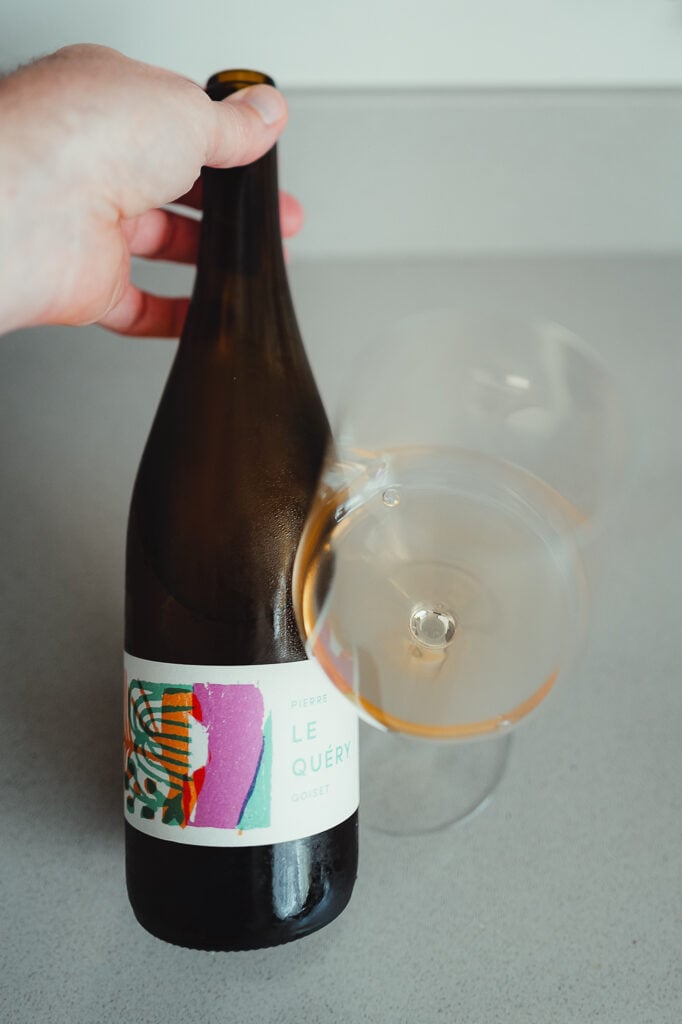
Le Quéry 2022 shows a different face of Melon Blanc, this time from genuinely old vines planted between 1920 and 1960 on granite soils. Deep-rooted vines yield a wine with a golden amber hue and clear concentration. The label, with purple, orange, and green geometry, fits the layered personality in the glass. At 12.5% alcohol the wine offers more textural depth than conventional Muscadet, while keeping the granitic mineral tension that sets these wines apart.
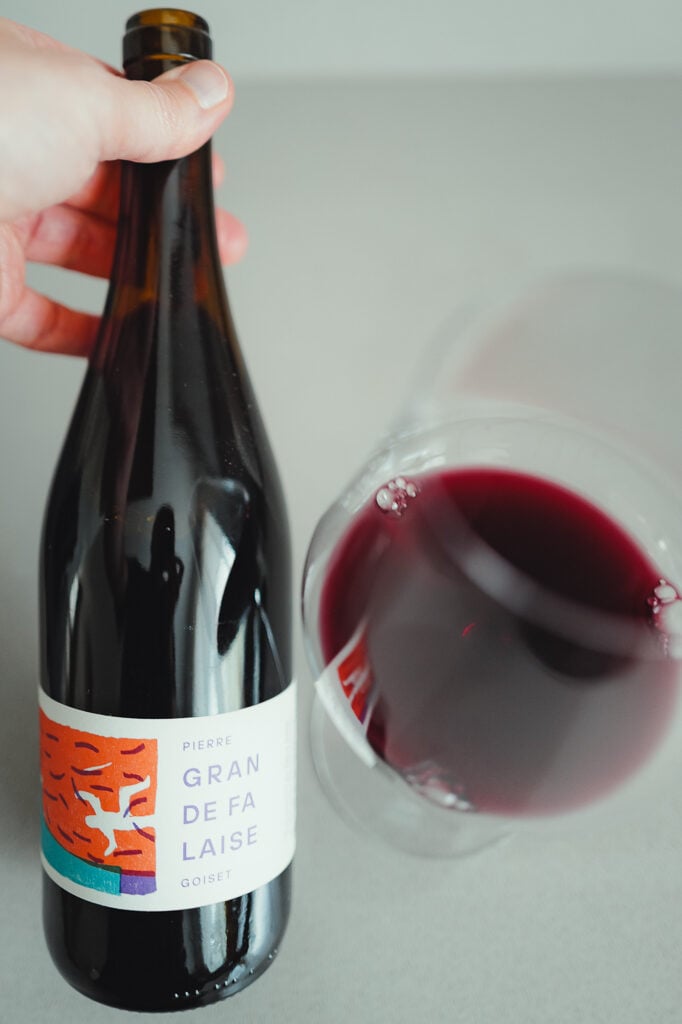
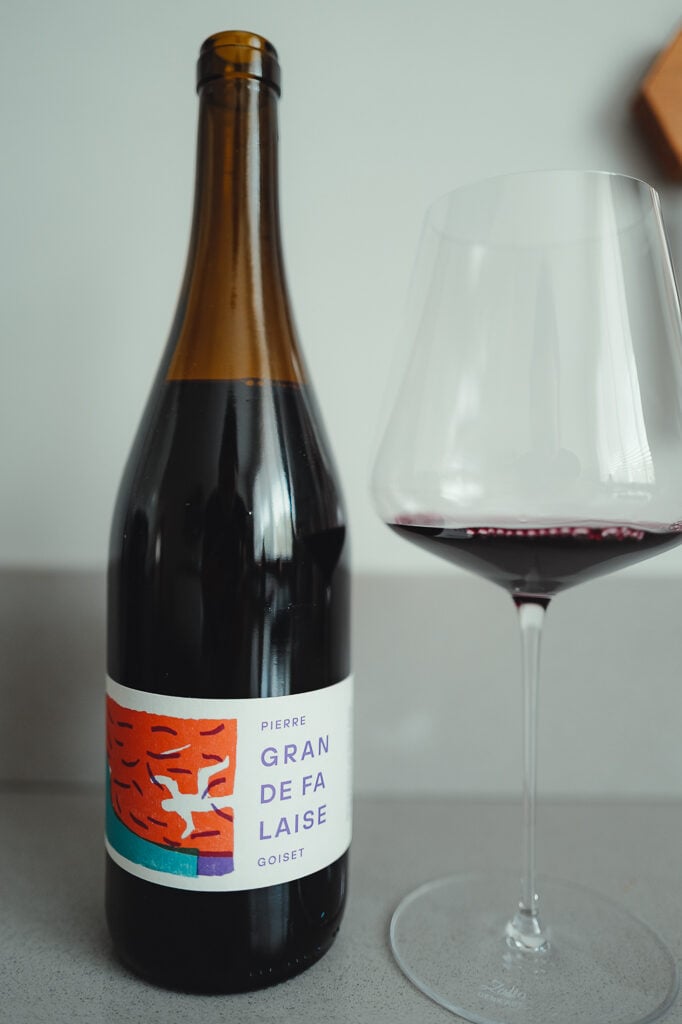
Grande Falaise 2022 is Goiset’s run at red wine, with Merlot from young vines on granite in the Le Quéry parcel. The wine gets a short infusion of a few days rather than an extended maceration, which preserves freshness and delicacy. The ruby-purple colour is vivid, and the label, with abstract orange shapes against turquoise and purple, matches the wine. At 13.5% alcohol it carries more weight than the whites, but stays balanced and food-friendly. After eleven months in tank, the wine quietly disproves Muscadet’s reputation as a whites-only region: this maritime terroir can deliver compelling reds when the grape gets room to breathe.
Living Wines Worth Seeking
Despite frost-affected seasons and the learning curve of natural winemaking, Goiset stays refreshingly grounded about what he does. The hard frost of 2021 left him with thirteen hectoliters per hectare against a target of thirty. The experience only sharpened his choice to work with nature rather than against it.
His wines are more than bottles to drink: they stand for a way of working in which nature, tradition, and craft line up. Production stays small and distribution is limited to natural wine addresses in Paris, Nantes, and beyond. If you can find a bottle, you get a clear look at where Muscadet is heading.
If you want a Muscadet that argues for what the appellation can be rather than what its reputation says it is, Goiset’s wines are worth tracking down. Your palate, and the soil under his vines, will thank you.
Sources
- InterLoire, Muscadet AOC and producers: vinsvaldeloire.fr
- INAO, Muscadet cahier des charges: inao.gouv.fr
- Demeter / Biodyvin, biodynamic certification: demeter.net, biodyvin.com
More on Winemaker
Biodynamic tasting calendar: does the fruit day hold?
A reel from Ploder-Rosenberg says wine shows best on fruit and flower days. The biodynamic tasting calendar sounds logical. The blind tasting says otherwise.
Read on →
Champagne Gallimard: Six Generations in Les Riceys
Two Gallimard bottles from a July subscription box. A solera running 2009 to 2022, hand disgorgement, and a label code that says something the story doesn't.
Read on →
Podere Sapaio: Bordeaux on the Bolgheri coast
Podere Sapaio makes Bordeaux blends in Bolgheri, with time as its guiding principle and concrete beside wood in the cellar. A portrait after La Grande Bellezza.
Read on →