

Reiler Goldlay Kabinett 2023: Mosel Riesling
Weingut Meurer Reiler Goldlay Kabinett 2023 tasted: classic Mosel style, low alcohol, slate minerality, and what makes Kabinett unique.

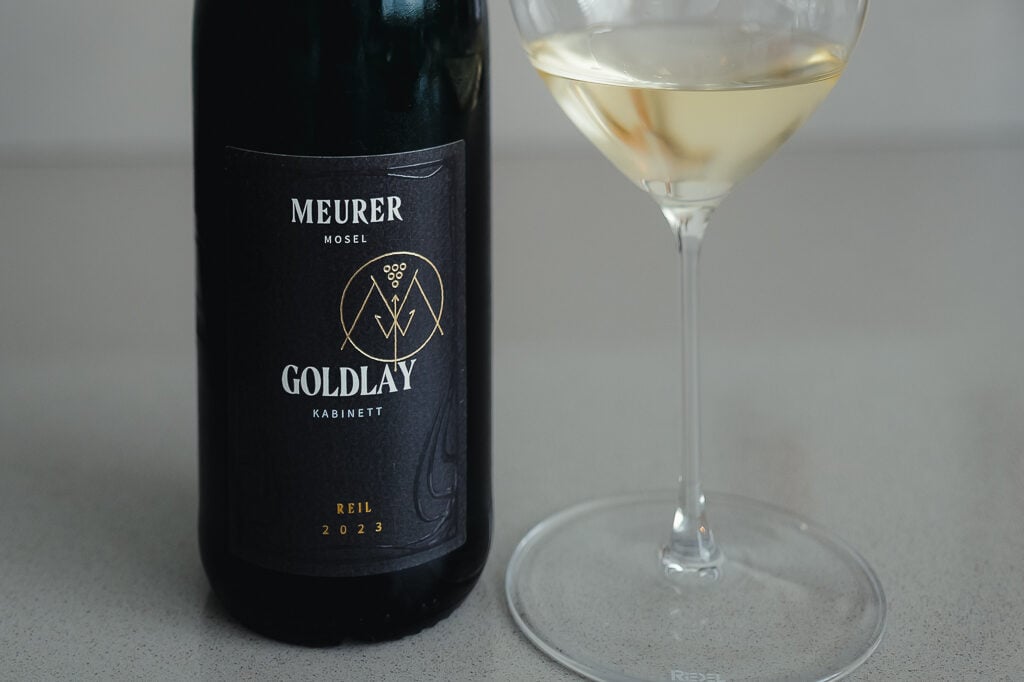
Kabinett is not synonymous with sweet. It’s the fine print most drinkers leave out when they say “German Riesling” and mean “too sweet for me.” The 1971 Prädikatswein system marks Kabinett as the lightest, most elegant category; residual sugar is allowed, but modern producers like Amelie Meurer make it dry and let terroir do the work. The Reiler Goldlay Kabinett 2023 is one of the sharpest examples of the last decade.
Reiler Goldlay: the vineyard
Sixty-year-old vines clinging to blue-grey slate on slopes that deserve climbing gear. Western exposure. The evening sun helps aromatics develop without sugars running away; exactly what a true Kabinett needs.
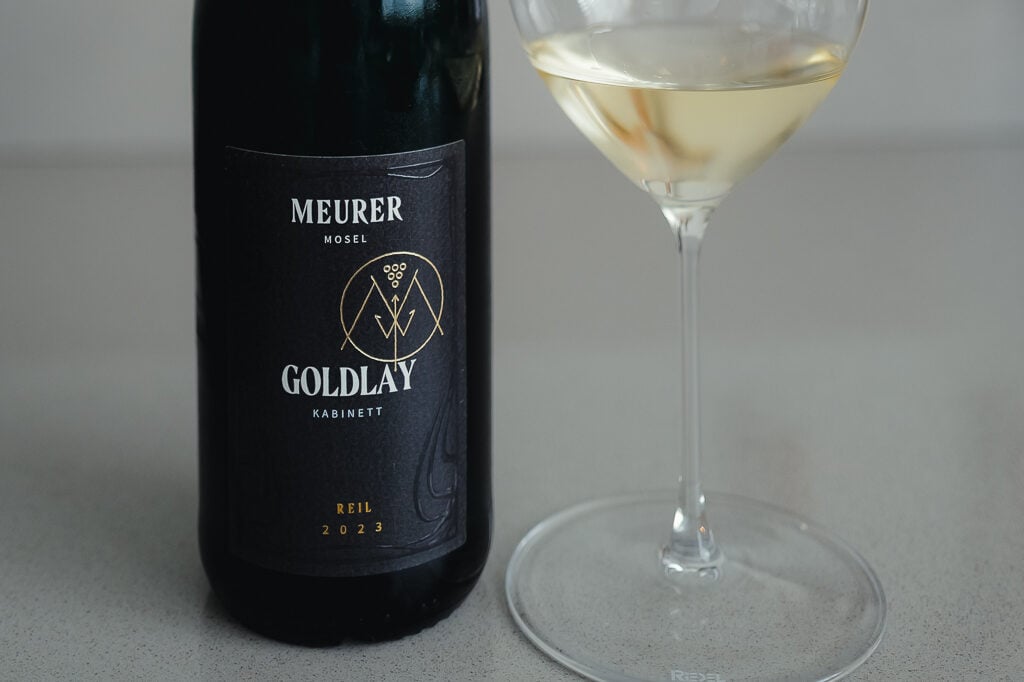
Slate absorbs heat by day and releases it through the cool nights. Beneath sits a red clay layer that explains the mineral spine the wine carries. Meurer harvests from three separate parcels within Goldlay, each with its own signature, blended only in the cellar.
Vinification
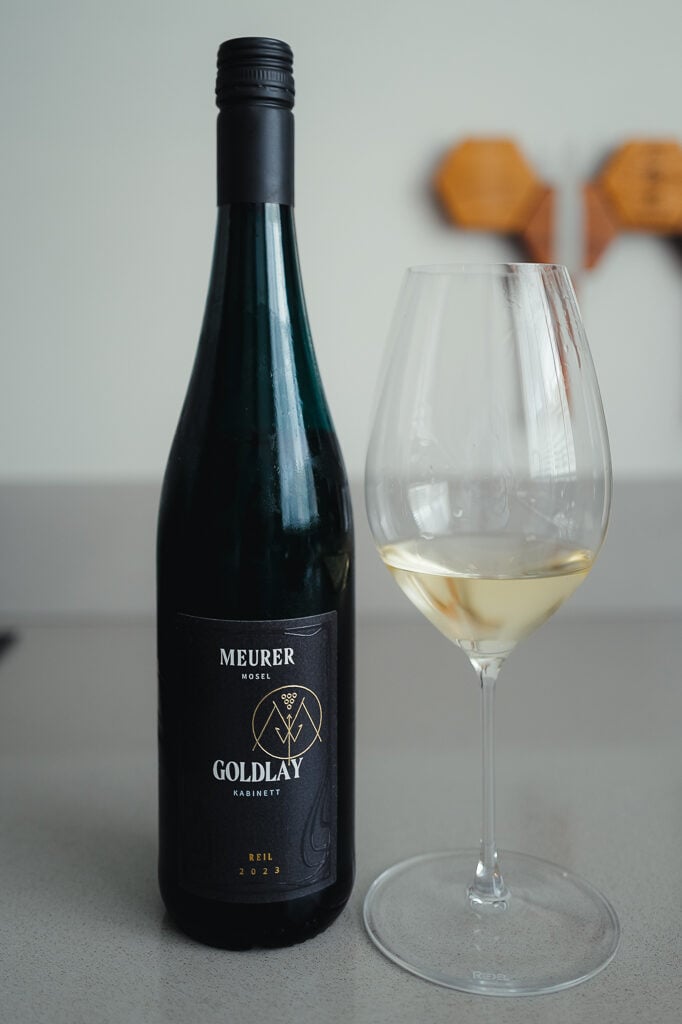
Hand harvest in 30-litre crates; no machine reaches these slopes. Just 30 hectolitres per hectare, around a third of what industrial Mosel production runs. Pneumatic press, then six months of spontaneous fermentation with house yeasts living in the Meurer cellar.
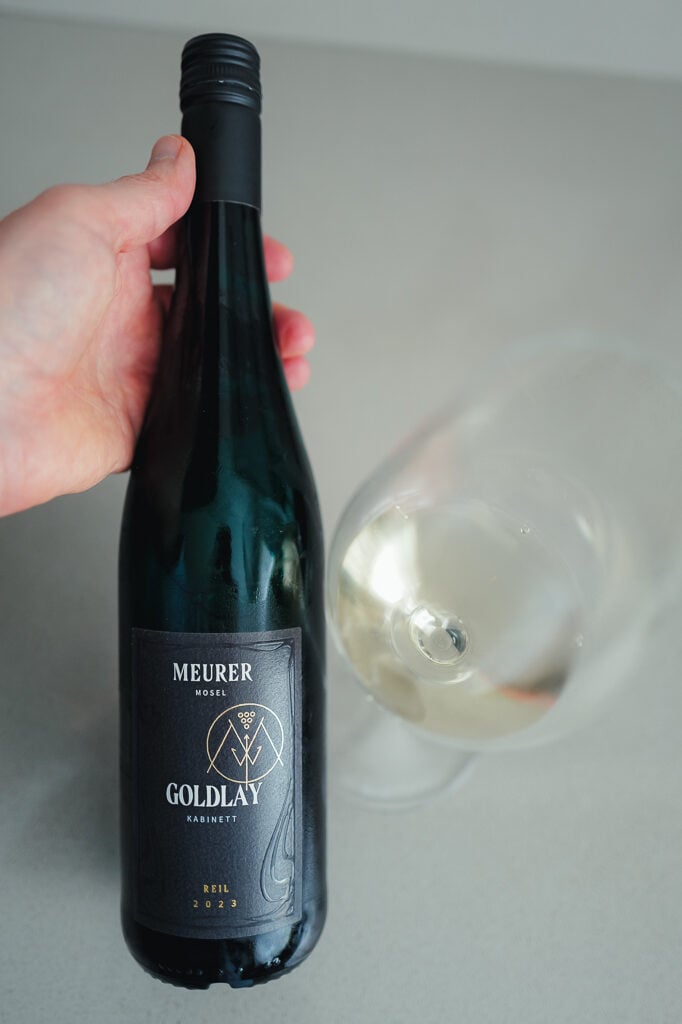
Then four months on fine lees in wooden casks. That’s unusual for Kabinett, where most producers go straight to stainless steel for primary freshness. The wood adds texture without burying the mineral line. The cloudy must stays in place, no early racking. Bottled February 2024, unfiltered.
In the glass
Pale gold. The nose opens with sharp mineral tone from the slate, balanced against fine fruit that reads candied rather than sugary. On the palate acidity arrives as weight without aggression, fruit that seems to glow from within, no sticky residual print. Long finish with a saline bite that pulls you straight to the next sip.
At the table
Fresh oysters or sushi (minerality bridges sea and wine). Roast chicken with herbs, spicy Asian dishes where the acidity tames the heat, fresh goat cheese, grilled white fish. Not a wine that dominates; one that surfaces as the right accent.
Verdict
At €15-20 one of the sharpest dry Kabinetts in this price bracket, and a corrective for anyone still thinking “German Riesling = sweet.” Drinkable young, ready to evolve another five to eight years.
Sources
- Wines of Germany: germanwines.de
- VDP: vdp.de
More on Wine Review
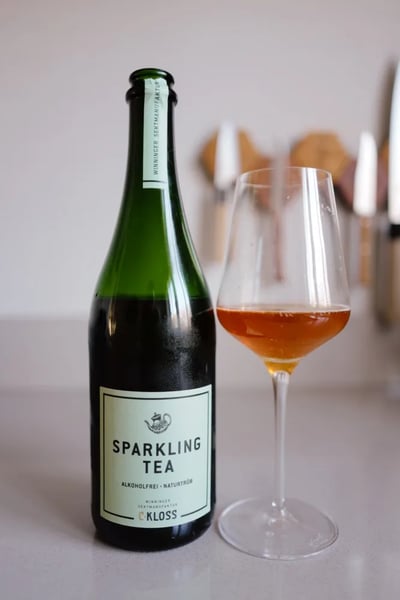
C. Kloss Sparkling Tea Weiss: Fermented Celery
Non-alcoholic sparkling tea Weiss from C. Kloss: linden blossom, nettle and fermented celery. Dry, 2.7 g sugar per 100 ml, €14.99 at Amavine.
Read on →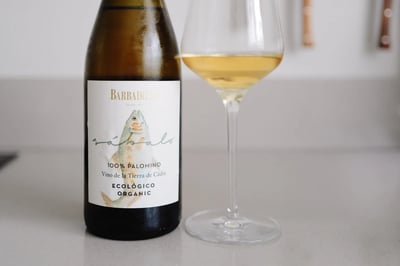
Barbadillo Sábalo: Organic Palomino Without Flor
Organic Palomino Sábalo from Barbadillo: no flor, salt from albariza soil. Chamomile, apple, sea. €17.95 at Granada Wijnen, with discount code.
Read on →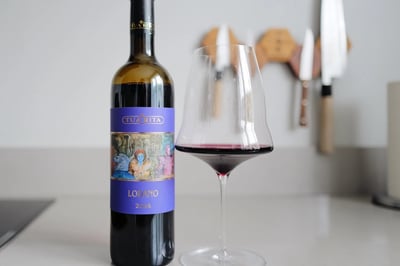
Tua Rita Lodano Rosso 2024: Petit Verdot Leads
A €50.95 Super Tuscan built on 60 percent Petit Verdot and 18 months of barrique. Why I chill it, decant it and never drink it without food.
Read on →