In the latest episode of Sparks by VinoVonk, we dive into the fascinating world of artisanal champagne with Douwe from Vindeux. Have you ever wondered what makes small-producer champagne so special? This innovative Dutch company has the answer, with a unique subscription model introducing independent champagne producers who haven’t yet entered the Dutch market.
A Revolutionary Champagne Subscription
Vindeux focuses exclusively on small-scale, artisanal champagne houses. Each month, subscribers receive carefully selected bottles accompanied by the stories behind their makers. This approach not only delivers exceptional champagne to your doorstep but connects you with the rich heritage behind each bottle.
Unlike mass-market champagnes dominating store shelves, Vindeux seeks out family-owned estates with limited production. I was particularly impressed by how this subscription concept allows these small producers to reach appreciative audiences without extensive marketing networks.
Claude Michel’s Cuvée Flore: A Hidden Gem
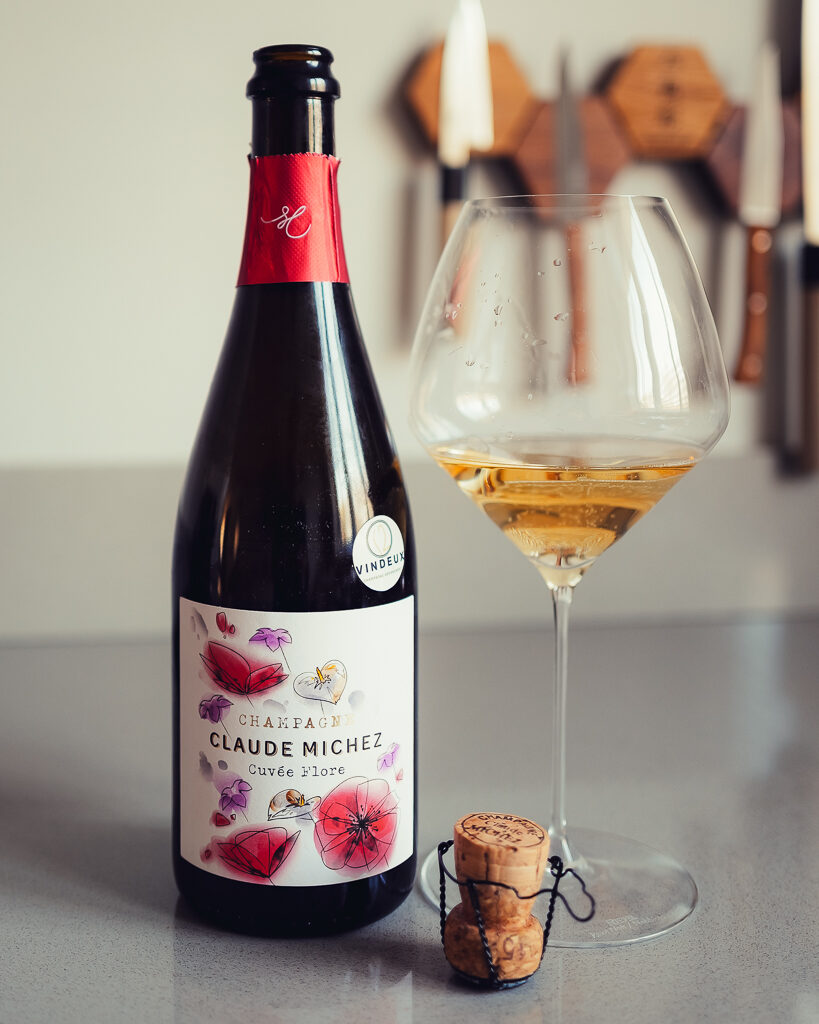
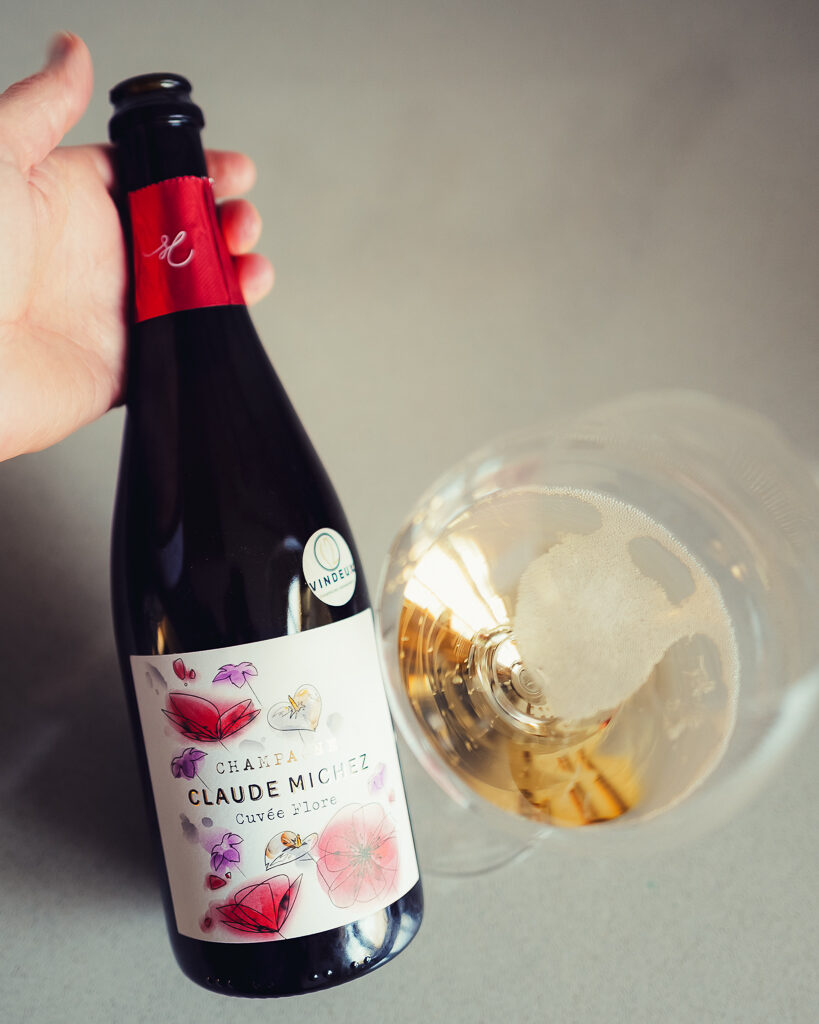
The highlight of our tasting was Claude Michel’s Cuvée Flore, crafted by a family that has been making champagne in Boursault since the 1970s. This exquisite champagne undergoes 4.5 years of aging, developing remarkable complexity while maintaining vibrant freshness.
The tasting revealed an elegant profile with delicate notes of brioche, green apple, and citrus zest, all carried on a backbone of chalky minerality. The fine, persistent bubbles create a texture that feels like silk on the palate—a true testament to artisanal craftsmanship.
Traditional Methods: The Artisan’s Touch
Douwe’s explanation of traditional champagne-making techniques was eye-opening. We learned about manual remuage (gradually turning bottles by hand) and degorgement (removing sediment), processes that larger houses typically mechanize.
These labor-intensive methods represent the champagne artisan’s commitment to quality over quantity. While more time-consuming, they allow for greater precision and significantly enhance the character of the final product.
The Artisanal Difference
What makes artisanal champagne truly special? It’s about passion, terroir, and individuality. Small producers like Claude Michel express their unique vineyard sites through their wines in ways that large houses, focused on consistency across millions of bottles, simply cannot.
Experience the Full Episode
Want to learn more about Vindeux’s subscription concept and see our complete tasting of the Cuvée Flore? Watch the full episode on my YouTube channel or as a podcast in your favorite app. Whether you’re a champagne enthusiast or simply curious about the world behind the bubbles, this conversation offers valuable insights into the craft of artisanal champagne.
More information about Vindeux: https://www.vindeux.nl/
Transcript: Sparks by VinoVonk featuring Douwe from Vindeux.nl
Jeroen: Hi, Jeroen here from VinoVonk and welcome to a new episode of Sparks by VinoVonk. The series where I take you through beautiful wines, innovative drinks, spirits, you name it. Today I have a great guest, Douwe from Vindeux.nl. Vindeux is a service for champagnes. But well, I don’t know the details, except that they have beautiful bottles. I’m holding a beautiful bottle they sent from Claude Michel, Cuvée Flore. My pronunciation, you can hear it, I should work on that. But Douwe, welcome to the show.
Douwe: Yes, thank you Jeroen. The pronunciation is fine. I think it’s acceptable. But indeed, we sent the bottle just like we do to all our subscribers. We have a subscription system with champagne. And every month we send new producers who aren’t yet in the Dutch market. And our subscribers get to make their first acquaintance.
Jeroen: That’s interesting. And Vindeux, well I know “vin” is wine, “-deux”, do you send two wines or are there two of you or how does that work?
Douwe: It depends on the subscription type. Either one or two. And we are indeed two people. I do it together with my girlfriend Ellen. That’s why we’re with two. And we started in 2022. So if you search for French wordplay, you’ll find “vingt-deux” in it.
Jeroen: Yes, fantastic. So you started a subscription service for champagne with your girlfriend. But you see that more. Subscription services, especially with wine and champagne. Why did you start it?
Douwe: We were once in the Champagne region and when you see how many producers there are, you can fall over backward. You can really be overwhelmed by how many there are. In some villages already 40 or 50. If you add them all up, there are about 1,500 producers. We thought we could pick out nice producers and create a kind of surprise effect. We could have the standard business model with a few houses that we have and always sell. But we found it fun to make a kind of journey of discovery through the Champagne region and launch a new producer every month.
And specifically focused on champagne because we have the idea that if you have a wine tasting box, it can contain wines that differ quite a bit in flavor profile and can really surprise you a lot. If you want a light Pinot Noir, you might get a heavy Mendoza in your package that doesn’t match your taste. With champagne, that difference is more nuanced. You always know you can get quality wine. There are many makers who put their own stamp on how they make the wine. So for us, that’s enough to discover.
Jeroen: What a nice initiative. And before we open this beautiful bottle, how did you come up with doing this and how do you even reach the producers?
Douwe: Yes, you could say we get in the car and drive there. That’s ultimately how it works, but we do a pretty good desk study beforehand, because we always choose producers who have something special. So those who do a certain part of the production process by hand, for example, the degorgement by hand, or do the remuage by hand, or who have a special family story. And that’s preceded by quite extensive desk research, so that we can also take our subscribers a bit… I don’t want to say educate, but still also take them along in the differences in the production process and what that means for the taste.
Jeroen: Interesting, yes. Speaking of education, you mention degorgement, you mention remuage. Could you briefly explain, in the form of a small educational course, what is the advantage of doing this by hand and what does it actually entail?
Douwe: The advantage of doing it by hand isn’t really there, except that you maintain a beautiful craft. With remuage, the bottles lie upside down in a pupitre, in a wine rack. It gets increasingly slanted, causing the yeast sediment to sink to the head of the bottle, to the neck of the bottle. They used to do all that by hand. Now there are big machines for it, those gyropalettes. So you see a bit of a change from those kinds of old crafts that you do by hand, that’s disappearing. But some producers find it beautiful to hold onto that. And they say, yes, I learned it at school in the past. Now it’s no longer taught at school, but I still want to continue doing it in my production. Yes, that’s just really beautiful.
The same applies to the degorgement, at the moment when the yeast sediment from the second fermentation leaves the bottle. That’s nowadays done with ice baths, where the top freezes and automatically flies out. We’ve been to producers who do 12,000 bottles a year by hand. Whether it really does anything to the taste, I don’t know, I don’t think so. But it’s just beautiful to see, such a craft still in action.
Jeroen: That sounds very beautiful. I can also imagine that not all small producers may have the money and space for such a machine. But a gyropalette just takes up much more space.
Douwe: Correct. Although there are many producers we visit who do have a gyropalette. There are producers with us who make between 8,000 and 20,000 bottles. And usually they do have their own gyropalette. Even if there’s just one, that saves a lot of work.
Jeroen: And have you ever been able to taste wines that have been processed by hand and those that have been treated with the machine?
Douwe: Yes, certainly. In our… I’m trying to remember which month that was. I think November last year. We had a producer who does everything by hand. And his sister does part of another brand. She does them with the machine. But I don’t really notice that difference. We just find it very fun to see how they still do that by hand. And also the choices they have, conscious choices that the producers make, in how they will set up a business process. Yes, and there are so many knobs they can turn. That already starts in the vineyard, but in the cellars too. And that means that every month you can tell something or mention something in the flyer we send along about what makes those producers so special.
Jeroen: Super cool, indeed, so you’re actually bringing the cellar to the people, because you can tell the whole story.
Douwe: Yes, actually you should always go see it yourself. So we also share some tips on Instagram of the producers we’ve been to. Go there. Our business cards are also there. So then we get reactions from those producers. We’ve had people from the Netherlands who came by. Yes, that’s very nice.
Jeroen: That’s pretty cool. So people, in my view, people have a subscription, they get a bottle. Then they share on Instagram like, well, look, we’re here now and here it is. So you really show, gosh, this is where it happens, this is where it comes from. And you know where it is. Well, then you go on vacation once or you happen to be driving in the area, you go there and then you visit it. Then you ended up there via Vindeux. And then the circle is complete.
Douwe: Great. And we would like to have an endless supply of all the producers we do at home. But that’s not always the case. So we choose a few that we think, those are really going to do well. Those are doing well, we get good reactions to them. And sometimes we have to make pretty hard choices there. So we actually also really like it when our subscribers and people who order from our webshop. That they also make a trip themselves if they’ve tasted this champagne from us sometime.
Jeroen: It could be that, for example, this beautiful champagne that you send, you fall in love with it and then it’s gone. That’s also quite an interesting concept. It’s not that you can buy something like today I buy this, then I buy that. No, it’s an experience. If you want to have more experience, you should go there. Or you should ask us to bring it next time.
Douwe: We’re not the meanest, of course. But it is true, with those subscriptions as a subscriber you are guaranteed to have this first. And usually we have a few bottles left that then go into the webshop. But not always.
Jeroen: Super cool. And can you tell something about this wine?
Douwe: Yes, certainly. The name of the producer is Claude Michel. The house is now run by his daughter and her husband. Those are two wine families that come together. So also merging the vineyards. He has been producing under his own name since… Somewhere in the 70s, I think 73. But only since 2010 under the leadership of his daughter. These are also Récoltant-Manipulant and completely independent. They really do everything themselves. They are located in Boursault. So slightly left of Épernay or west of Épernay in the Vallée de la Marne. So they have a really mega beautiful view when you’re there. And when the clouds hang low over the Marne. Then you look over the clouds. You have to go up a bit, climb a bit. But it produces beautiful wines.
And this wine, this is a blend of 25% Pinot Meunier, 30% Chardonnay and 45% Pinot Noir. And there’s a mistake on the bottle. But we found that out at the producer. It says on the back that it has matured in the cellars for 450 months. But I said yes… That would be very nice, but I don’t think so. So it has matured for 4 or 5 years.
Jeroen: I was also looking, I thought well that was one of my questions. I can’t imagine that 450 months, that’s just a few years, it’s just really very long. But four and a half years is still very long.
Douwe: Certainly, that is a good period. They also have another brand where they also store a lot on oak barrels. So they are used to letting champagne lie longer. That works well according to them to bring out the wines they make well. Those need some time.
Jeroen: And do they let their wines lie for a long time after the degorgement or is it degorgement and shipping and drinking?
Douwe: This was with the new labels. These are, I think, somewhere end. We picked this up at the end of January. These were probably labeled in November. So that’s about two months apart. So that’s not very long. But that differs from producer to producer and also from importer to importer. Some say at the moment you do degorgement, I’ve heard a winemaker say that once, then it’s like, you can compare it to a human being that you amputate an arm and then it takes a very long time before you recover. And that’s also with a wine. And there are producers who prefer to let it recover for a year, two years after the degorgement.
Jeroen: Yes, we encounter those too. I actually trust Cyrille and Laurence, they have those products that they make a good choice here. You don’t select on that, but because you have good personal contact, you know okay, this is good. You taste the bottles of course too.
Douwe: Yes, so we taste the bottles and we also quite often have that we come to houses where we think, this is not quite. Or they can’t quite convey the story. So then we take a few bottles home to taste, but then we don’t actually do it. We do it based on being there and tasting at home once and then we make the choice, is this qualitatively good enough? A friend of ours is an oenologist, so she helps us with that selection. And that just works pretty well for us.
Jeroen: Super cool. Shall we taste this?
Douwe: Yes, let’s indeed… Not 450 months, but 4.5 years…
Jeroen: Yes, correct.
Douwe: The highest dosage proportion of the classic grapes is Pinot Noir. 6-6.5 grams per liter. So it’s a brut. If you also see the mousse, then it’s a very fine and elegant mousse. And of course there’s only… Flowers on the label. I’ll show it. Cuvée Flore, flowers, especially poppies I think.
In the nose you encounter that again, but well, I might be getting ahead of things a bit.
Jeroen: You say it’s mainly Meunier, but on the back it says 45% Pinot Noir.
Douwe: I said 45% Pinot Noir.
Jeroen: That’s right. Super beautiful mousse. Let me show it closer. You would want to say it smells very floral, but that’s a bit cliché.
Douwe: Yes, you can smell white fruit, so a bit peachy. Because there’s also a lot of toast and bread dough still.
Jeroen: It has been in the cellars for a while of course.
Douwe: Yes. And also just a bit of peach, strawberries, a bit of flower, grapefruit, really a very wide palette of different types of fruit, but also lots of flowers. Really a sort of large bouquet of flowers that you smell.
Jeroen: Yes, that’s the beauty of such an assemblage here, so a champagne with multiple types of grapes in it, that then each grape can actually show its character. When you smell and when you taste, yes, that’s top.
Douwe: I also really have a lot of pear. I think it comes from the Meunier.
Jeroen: It could also be Chardonnay that has aged a bit. And honey, that’s really very special. It’s also a bit dark. It’s not very light.
Douwe: No, it’s a bit of a light golden glow. Very beautiful. Well, cheers Santé!
Jeroen: Yes, exactly, then a bit of smokiness is released. We probably also had something of wood.
Douwe: This, no I think it was purely the aging on the bottle. This hasn’t lain on wood. It could have been yeast or…
Jeroen: Super beautiful and also nicely tight, nice acidity, but not too much. And it also has a certain elegance and is also very round. And everything you smell, you also taste again. Super beautiful balance.
Douwe: That aftertaste just keeps coming and it develops too. It keeps coming and it also becomes, I can still feel it a bit now, those acids still coming a bit. It’s just very well-balanced and actually everything you smell indeed, you taste back.
Jeroen: Yes, super cool this.
Douwe: Yes, I can understand that you thought well, we should put this in the subscription.
Jeroen: Yes, it was very difficult for us to make a choice because they had a lot of good champagnes. So it was quite difficult to choose what to do then. But we are satisfied with this one yes.
Douwe: So they make more champagnes that are also very tasty, so they might come into the subscription again sometime.
Jeroen: Could be. Yes, what I said, there are megamany producers of course. So do you go back to the same producer or him. But this would be a very good candidate for a bottle that we have standard in the webshop.
Douwe: Yes. Super cool. Then we wonder, such a subscription, is it a fixed amount per month or do you pay each time you take it? How does it work?
Jeroen: You can cancel it monthly. You enter into it and then you pay €38.95 for one bottle. And from the top of my head €65.95 for two bottles. Have to calculate again though. And then you can choose how long you want to remain a member yourself. You can cancel monthly, so at the moment you think, I’m going on vacation or it doesn’t fit well now, then you can pause it.
There are also a lot of people who give it as a gift to their parents for example, when they’ve been married for so many years, or people who have reached a certain age. And then they give the argument for three months for example. So then they give it as a gift for three months and we also get a lot of good reactions to that. That’s really a super nice gift, because you have a birthday then you can say, here’s the gift, but I get this. And then it’s like, well, super nice.
Douwe: And if you do two bottles, do you get two of the same or do you get two different ones?
Jeroen: No, you get two different ones. At Claude Michel from last month you received this one and a Brut Nature. Without sugar added, so 0 grams per liter added. Even tighter, also aged longer in the cellars. So if you have two bottles, you pay a bit more, but in proportion maybe also less. Then you always get something special added.
Douwe: Super cool and then you get a story with it via email and on Instagram and of course also in the box a piece.
Jeroen: A flyer with photos and info about the wine house and about the champagne itself. Of that we also share pieces on our Insta. And we also always taste on our Insta, because we find it important that the champagne is not only to look at in the wine rack, but especially to taste and drink.
Yes, it’s not the intention that people take a subscription to lay their cellar nicely for me, but it’s the intention, you buy it and in that month you’re also going to drink it. You’re going to enjoy it.
Douwe: Then you can be very strict in that of do you only want to do it with parties or in principle you can choose a good moment from any moment to pull over a bottle of champagne.
Jeroen: Yes, that’s a good sign. Champagne is always possible. Whether you’re happy or not, they always say.
Douwe: And if you look to the future, because this is of course a very nice model, but if you were to take a look at the future, where do you think it will go? Or do you have something new that you say?
Jeroen: This suits us very well so far. So we’re going to develop those subscriptions further with more types of subscriptions. We also want that, you occasionally have with clothing brands for example, you really have a drop moment. Of okay, this moment we’re going to develop that more.
And we’ve been running on our current site for a year and a half now. So we’re also going to tackle that soon. That it becomes even fresher and more accessible for people to choose what kind of subscription suits me or what kind of bottles I want to reorder.
And we’re very proud of it. There’s also a restaurant in Amsterdam that also has a changing champagne on the menu. That also seems fantastic to expand that a bit more. That there are more restaurants that say from this month we have this champagne by the bottle. We can also arrange that very well. Because yes, we launch a new bottle and new producer every month. So those are a few ambitions from once of, that seems nice to apply further.
Douwe: Super cool, yes it’s three bottles every month if I understand correctly.
Jeroen: Yes, that’s possible. It’s one or two bottles, but in principle two new bottles on the Dutch market.
Douwe: Yes, super cool. And which restaurant in Amsterdam is that?
Jeroen: That’s Barboes, on the Wibautstraat.
Douwe: Yes, very good. I’m curious. Yes, it’s of course a surprise of, well, you know, if you don’t have the subscription, that you say, gosh, I don’t know which one it is. But suppose now that you have the subscription, that you think, well, this is such a very tasty champagne. What would they make with it? And then you go there and you think, I know that one. But then you get the food almost. Then it becomes a completely different experience again.
Jeroen: Correct. Correct. Yes.
Douwe: Cool and those drops that’s also cool because then you have something new that doesn’t come in the subscription because it’s maybe too expensive or it’s a bit different it just doesn’t fit in and you have 200 subscribers but you only have 100 bottles now yes yes super cool
Jeroen: Correct. There’s enough potential for us to grow. And there are many other champagne companies that are also doing well. I think there’s sufficient market for that. And yes, we do it our way.
Douwe: Super cool to hear. And if people want more information, of course the links are in the show notes and such things, but if people think, yes I want to hear it, where can they go?
Jeroen: I would then first go to our Instagram. There you’ll find all the champagnes from the past months that we’ve launched. And also lots of photos of what we do when we go to producers. And of course to our site. If I do that somewhere mid-April again, because then it’s completely updated. And then the bottles from January, February and March will be on there again.
So then, yes, maybe, but I don’t know if this is already it, but maybe there are still a few of these bottles available then.
Douwe: Yes. Check it out at vindeux.nl. Everything is in the show notes. Douwe, thank you very much for your time and thank you very much for sending this bottle. A written article will also appear soon on vinovonk.nl. I would say cheers and until next time.
Jeroen: Until next time, santé!