The Grape Behind the Bubbles
The Black Muscat of Tirnavos (Muscat Hamburg) has called the Thessalian region of Tirnavos home since the 1930s, when phylloxera devastated vineyards, prompting widespread replanting. This variety found its ideal terroir in Tirnavos’s warm continental climate and well-drained soils, and today over 10,000 acres flourish here.
What makes Black Muscat perfect for sparkling production? Its inherently aromatic nature. The grape contains high levels of volatile compounds called terpenes, which create intense floral and fruity aromas. When combined with effervescence, these aromatics literally lift off the glass—imagine opening a bottle and being greeted by an entire rose garden.
What Does “Half Mousserend” Actually Mean?
Here’s where it gets interesting. “Mousserend” is Dutch for sparkling, and “half mousserend” means semi-sparkling. These wines have gentle effervescence rather than aggressive bubbles. The bubbles in this wine come from the Charmat method (also called the closed tank method), meaning there’s no second fermentation in the bottle like in traditional Champagne.
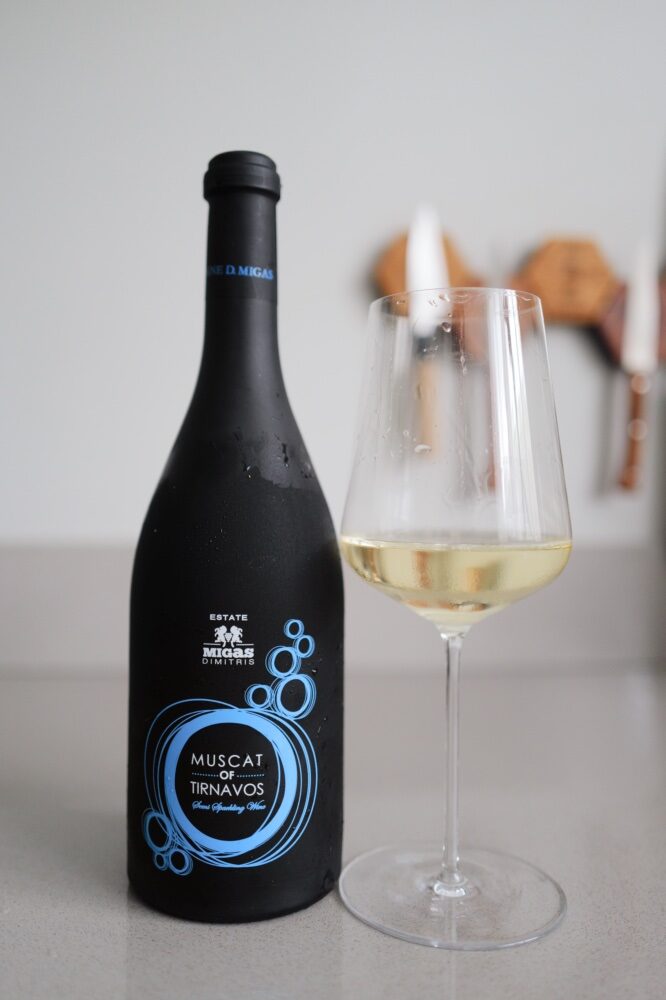
When I opened the bottle, I noticed it had a regular cork rather than a crown cap—and just a small, gentle fizz. The lower pressure creates softer, creamier bubbles that caress rather than prick your palate. If you’ve ever found traditional sparkling wines too aggressive or acidic, you’ll appreciate this gentler approach.

A Sensory Experience
What immediately strikes you is the beautiful golden-yellow color with those light, delicate bubbles rising through the glass. Once you’ve let it breathe a bit, the nose reveals tremendous honey tones alongside peach—that sweet, elegant character that defines this style.
I’ll be honest: you need to enjoy slightly sweet wines to appreciate this one. But there are plenty of people who do, and for them, this wine delivers beautifully. On the palate, what you notice immediately is the low acidity—the sweetness takes center stage, though you still get a little touch of acidity to keep things balanced. Those bubbles do precisely what they should: clean your palate between sips. The wine does stick slightly to your lips, but it remains incredibly fresh and fruity throughout.
At €16.50 from Rick Eradus’ wine shop and 11% alcohol, it occupies an interesting space. Personally, it’s not my cup of tea—I prefer drier styles—but I can absolutely recognize this is incredibly accessible. I honestly think there are very few people who wouldn’t enjoy this wine. It’s fresh, fruity, and welcoming.
However, specific sugar levels (grams per liter) would help consumers gauge exact sweetness relative to international standards.
Versatility That Surprises
As an aperitif, this wine excels—especially with a slight bite to accompany it. I’d definitely recommend it with seafood; even oysters could work surprisingly well with that touch of sweetness cutting through the brininess.
I also think this would be fantastic with pastries or baked goods—that honey-sweet character complements desserts beautifully. And here’s an interesting pairing: spicy Asian dishes, maybe something from a wok. The sweetness soothes the heat of chili while the bubbles refresh and cleanse your palate between bites.
Estate Migas Dimitris suggests fresh salads, fruit, and pastries alongside seafood, and these recommendations all make perfect sense. Serve well-chilled at 6-9°C to maximize refreshment.
Your Gateway to Greek Sparkle
The Black Muscat of Tirnavos Half Mousserend represents everything exciting about modern Greek wine: respect for indigenous varieties, thoughtful winemaking, and refreshing accessibility. Available exclusively through Rick Eradus Wijnimport in the Netherlands, Belgium, and Luxembourg, this wine is definitely worth a try. While it’s not my personal preference, I can appreciate its elegant execution and understand exactly who will love it—and that’s a lot of people.
Transparency note: This article is part of a paid collaboration with Rick Eradus Wijnimport. Rick, thank you for this collaboration. All opinions reflect honest personal assessment.