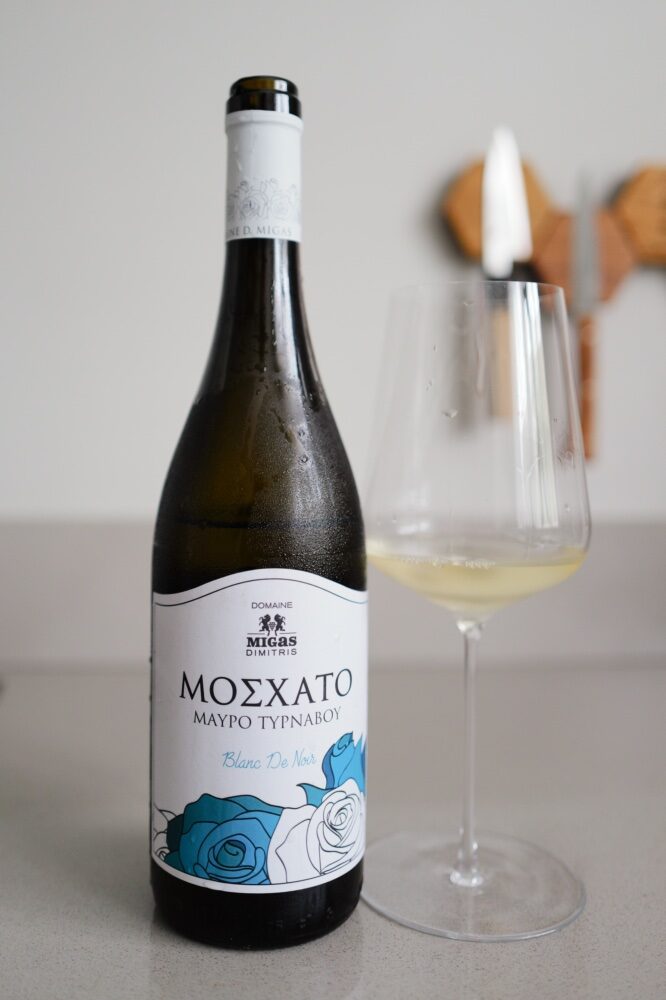
Not all white wines come from white grapes. The French call it “blanc de noir”—white from black—and it’s a winemaking technique that requires both skill and courage. When executed brilliantly, as Domaine Migas Dimitris does with their Black Muscat of Tirnavos Blanc de Noir, the results are nothing short of spectacular. Imagine a wine bursting with rose petals and golden fruit that challenges everything you thought you knew about white wine.
Understanding the Black Muscat Grape
The Black Muscat of Tirnavos (officially Muscat Hamburg) carries a rich heritage and a distinctive flavor profile. This variety emerged from a cross between Italian Schiava Grossa and Egyptian Muscat of Alexandria, first cultivated in English greenhouses before finding its true calling in Greece’s Tirnavos region. When phylloxera devastated local vineyards in the late 1920s, forward-thinking authorities distributed Muscat Hamburg vines during the 1930-36 replanting period.
Today, Tirnavos boasts over 10,000 acres of this remarkable variety. The grape’s dark purple skin conceals colorless juice yet harbors intensely aromatic compounds. While many regions use Muscat Hamburg as a table grape, Tirnavos winemakers have harnessed its potential to create extraordinary wines.

The Blanc de Noir Technique: Science Meets Artistry
How do you make white wine from black grapes? The secret lies in speed and temperature. Winemakers must press the grapes immediately after harvest—the dark skins barely kiss the juice, preventing color extraction while preserving precious aromatic compounds. Think of it like brewing white tea: too much contact, and everything changes.
Domaine Migas Dimitris employs cold fermentation to protect the Black Muscat’s delicate rosé and fruit aromatics. After fermentation, the wine ages for three months on fine lees in stainless-steel tanks with extensive bâtonnage (stirring). This technique adds that slightly buttery effect and creates a fuller mouthfeel—what I’d describe as waxy, almost oily in texture. It’s this process that gives the wine its rich, mouth-coating character without oak’s heavy influence.
However, the winemaking description doesn’t specify whether malolactic fermentation occurs—a detail that affects both acidity and stability.
In the Glass: A Sensory Journey
When I first poured this wine, I was immediately struck by something intriguing. You see a white wine in your glass, yet there’s something more happening. Is it a rosé? Is it red? That ambiguity makes it super interesting. The nose delivers fresh, fruity aromatics, but with an intriguing complexity that makes you wonder what’s going on.
What I found most fascinating were the red fruit notes—cherries, raspberries—combined with wet forest floor, that earthy character you experience walking through autumn woods. There’s also plenty of citrus fruit cutting through, making it wonderfully refreshing.
On the palate, you’ll immediately notice that waxy, oily, slightly buttery texture—almost yogurt-like in character. It reminded me of those Danone yogurts from childhood, the raspberry or apricot-peach varieties. The wine is delightfully fresh and fruity, with notably low acidity, making it incredibly accessible. The finish is relatively short, and the wine isn’t overly complex, but that’s part of its charm.
At 12.5% alcohol and priced at just €9.38 (down from €12.50) at Rick Eradus wine shop, this represents exceptional value. The only missing detail? Vintage information to help you understand the wine’s age and development potential.
Pairing Perfection and Serving Suggestions
This wine’s aromatic intensity and unique texture make it surprisingly versatile. I’d definitely recommend it as an aperitif, or paired with something a bit spicy—think grilled fish with bold seasonings. The wine’s red fruit character and earthy undertones give it more versatility than typical white wines.
Domaine Migas Dimitris suggests seafood and white meats, which absolutely works. The low acidity and rich texture complement delicate proteins without overwhelming them. Serve well-chilled at 8-10°C (46-50°F) in a medium-sized white wine glass to concentrate those intriguing aromatics.
This isn’t a wine for long cellaring—drink it within 2-3 years to enjoy its youthful, fruit-forward character.
Discover This Greek Gem
The Black Muscat of Tirnavos Blanc de Noir proves that Greece’s wine renaissance isn’t just hype. It’s definitely worth trying—something new, something different from what you’re used to. Available exclusively through Rick Eradus Wijnimport in the Netherlands, this wine offers adventurous drinkers a genuine discovery. At under €10, there’s little risk and tremendous potential reward for your palate.
Transparency note: This article is part of a paid collaboration with Rick Eradus Wijnimport. All tasting notes reflect genuine personal assessment.