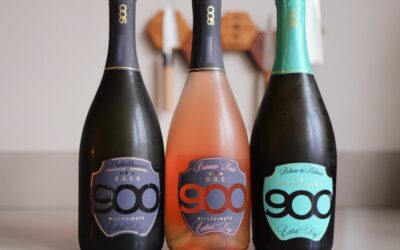
Part 3 of 3 in the 900wine Prosecco Series
I’ll be direct: spending nearly €28 on Prosecco feels wrong to most people. We’re conditioned to think of Prosecco as the affordable alternative to Champagne, the casual sparkler for brunch mimosas, not a wine worth serious money. But here’s what I’ve learned after tasting the 900wine DOCG Valdobbiadene Millesimato: when everything aligns—terroir, production, classification—Prosecco can genuinely compete with wines costing significantly more.
This is the final bottle in the three-part series sent to me by Erwin at De Bigondier, and it’s the one that completely challenged my assumptions about what Italian sparkling wine can achieve.
The Wine: Understanding DOCG
Before we dive into tasting notes, let’s talk about what DOCG actually means, because it’s crucial to understanding why this wine costs €11 more than the Gran Cuvée entry-level bottle.
DOCG stands for Denominazione di Origine Controllata e Garantita—Italy’s highest wine classification. While DOC (like the rosé I reviewed last week) ensures controlled production standards, DOCG adds “e Garantita”—and guaranteed.” This means:
- Stricter geographic boundaries (only specific vineyard sites qualify)
- Lower permitted yields (fewer grapes per vine = more concentration)
- Longer aging requirements before release
- Mandatory tasting panel approval before bottling
- Government lab testing and certification
- More rigorous production oversight at every stage
Specifically, “Valdobbiadene” indicates grapes from the Conegliano Valdobbiadene DOCG zone—a UNESCO World Heritage site considered the absolute best terroir for Prosecco production. The hills here, between the Dolomites and the Adriatic Sea, create a unique microclimate that Prosecco producers consider ideal.
In short: DOCG isn’t marketing fluff. It’s a genuine quality pyramid, with the top tier representing the best of what Prosecco can be.
Tasting Notes: When Everything Clicks
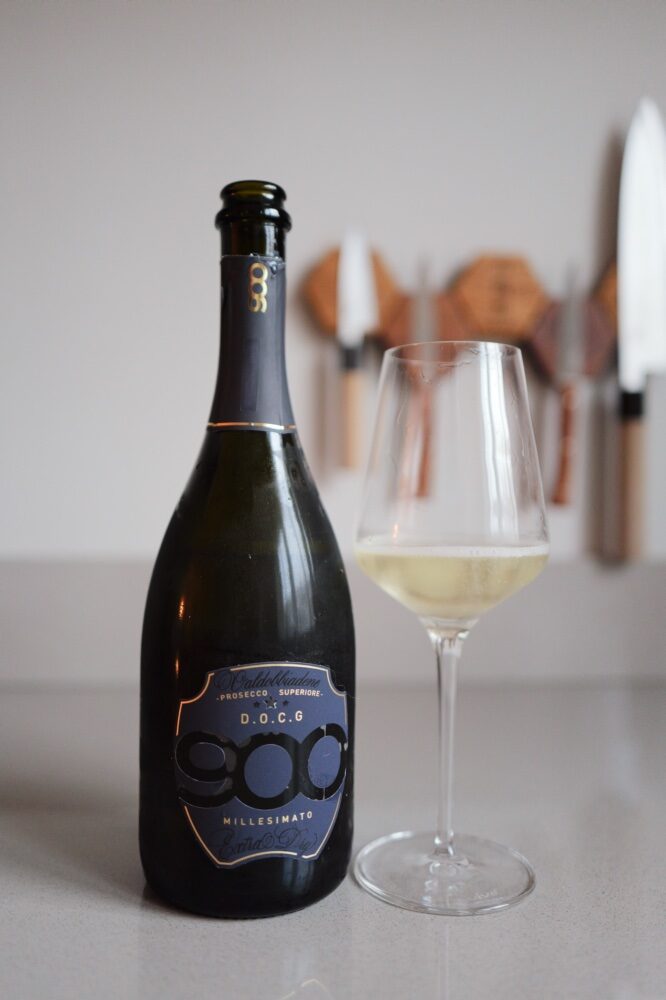
Visual: Pale gold with subtle greenish reflections and excellent, persistent bubbles. The perlage (the Italian term for bubble quality) is noticeably more refined than both previous wines in this series—smaller bubbles that stream continuously in elegant chains. This matters because smaller bubbles indicate better integration and longer aging potential.
Nose: This is where the wine announces its superiority. The aromatics are layered and elegant in a way that the other two weren’t. Green apple leads, but it’s a crisp, fresh apple—not the bruised note from the Gran Cuvée. Behind that: jasmine flowers, white tea, hints of white peach and pear. There’s a mineral quality threading through everything, like wet stones or chalk, that speaks to the hillside vineyards these grapes came from.
The nose is complex enough that I found myself returning to the glass repeatedly, discovering new layers—a touch of honey, faint citrus zest, even delicate brioche notes you’d typically associate with traditional-method sparklers like Champagne.
Palate: Here’s where everything comes together. The mousse is exceptionally refined—those tiny bubbles create a creamy, almost silky texture on the palate. The acidity is perfectly balanced—medium-plus, providing structure and freshness without being aggressive. The fruit expression is pristine: green apple, white peach, subtle citrus, all beautifully defined.
What impressed me most was the layering. This isn’t a one-dimensional wine that shows everything immediately. It evolves in the glass, revealing different facets as you taste—fruit, florals, minerals, a whisper of almonds on the mid-palate. The integration between bubbles, fruit, and structure is seamless.
Finish: Long and elegant, with lingering mineral notes and a whisper of white flowers. This is a proper finish that invites the next sip.
Critical Assessment: Finding the Flaws
I’m committed to honest reviews, which means acknowledging limitations even in wines I love. So let me be clear about my reservations:
Price Sensitivity: At €27.99, this costs nearly 65% more than the already-good DOC Rosé. For many consumers, that’s a significant jump that might not be justifiable for everyday drinking. This is a special-occasion Prosecco, not Tuesday-night wine.
Still Tank Method: Despite the DOCG quality, this remains a tank-fermented sparkler using the Charmat method. It’s brilliantly executed, Charmat, but you’re still not capturing the complexity of traditional-method production (where fermentation happens in the bottle, creating those yeasty, toasty notes found in Champagne). If you’re comparing this directly to €30-40 Champagne or Franciacorta, that difference becomes apparent.
Context Matters: In a blind tasting against serious French bubbles, some tasters might still prefer the brioche and complexity of traditional method production. This is the best of what Prosecco can be—but it’s still fundamentally Prosecco, with all the category’s characteristics.
Those caveats aside? This is an exceptional wine that punches well above its price point.
Food Pairing: Elevated Occasions
Given its refinement and price, this deserves more thoughtful pairing than a casual aperitivo:
Outstanding Matches:
- Raw oysters with mignonette: The wine’s mineral quality mirrors the brine in the oysters—classic pairing elevated by Prosecco’s delicacy.
- Scallop crudo with citrus: The wine’s elegance doesn’t overpower delicate seafood while its acidity complements citrus.
- Burrata with white peaches: Echoes the wine’s peach notes while the creaminess plays against the bubbles.
- Lobster risotto: Rich enough to need the wine’s structure, delicate enough not to overwhelm it.
- Grilled Dover sole with lemon butter: The classic preparation deserves classic wine—this works beautifully.
More Adventurous Pairings:
- Sashimi omakase: The precision in both the fish preparation and wine creates harmony.
- Truffle-infused pasta: The earthy complexity complements the wine’s mineral notes.
- Soft-shell crab tempura: The wine’s acidity cuts through the richness while respecting the delicate crab.
Serving Temperature: 6-8°C initially, but don’t be afraid to let it warm slightly to 9-10°C as you drink—the aromatics become even more expressive.
The Real Occasion: This is the Prosecco you serve when you want to impress without being pretentious: anniversary dinners, important client meetings, celebrations where you want Italian elegance rather than French formality.
The Valdobbiadene Difference: Terroir Matters
The Conegliano Valdobbiadene DOCG zone encompasses steep hillside vineyards between 50 and 500 meters in elevation. The soils here are predominantly clay and limestone, which impart that mineral quality you taste. The proximity to both the Adriatic Sea and the Dolomites creates dramatic temperature swings between day and night—crucial for developing aromatics while maintaining acidity.
This isn’t industrial Prosecco from flat valley floors. These are genuine hillside vineyards where mechanization is difficult or impossible, requiring hand-harvesting and careful viticulture. The yields are strictly controlled—you can’t just chase quantity when vines are this limited.
The “Millesimato” designation means all grapes come from a single vintage rather than being blended across years. This requires the vintage to be good enough that the wine can stand on its own merits without blending for consistency.
All of this costs money. And you can taste where that money went.
Value Assessment: The €28 Question
This is the crucial question: Is this worth nearly €28?
The Mathematical Comparison:
- Gran Cuvée (€17): 1.0x baseline
- DOC Rosé (€25): 1.47x price, ~2x quality improvement
- DOCG Valdobbiadene (€28): 1.65x price, ~3x quality improvement
In pure quality-to-price ratio, the DOC Rosé is still the “smart buy.” But sometimes you’re not optimizing for value—you’re optimizing for absolute quality.
What You’re Paying For:
- DOCG certification and oversight
- Valdobbiadene hillside vineyard sourcing
- Lower yields and higher concentration
- More refined production and more extended aging
- Vintage dating and consistency
- That final 20% of quality that costs disproportionately
The Competition at €28:
- Basic Champagne (€30-35): Comparable or slightly lower quality
- Entry Franciacorta (€28-32): Similar quality, different style
- Premium Spanish Cava (€20-25): Often better value but less refined
- High-end white Prosecco from other producers (€25-30): Comparable
Against basic Champagne, this is genuinely competitive. You’re trading the yeasty complexity of the traditional method for pristine fruit expression and elegance. Neither is objectively better—they’re different styles.
Who Should Buy This:
- Prosecco lovers wanting to experience the category’s peak
- Wine enthusiasts seeking alternatives to Champagne
- Those hosting sophisticated gatherings where quality matters
- Anyone celebrating special occasions without a Champagne budget
Who Should Skip This:
- Everyday drinkers (the DOC Rosé at €25 is more practical)
- Those specifically wanting Champagne’s yeasty character
- Budget-conscious consumers (plenty of good options under €20)
- Anyone making cocktails or mixing (criminal at this price)
Production Excellence: Why It Tastes This Good
900wine’s approach to their DOCG tier reflects ga enuine commitment to quality. Hand-harvesting is mandatory in Valdobbiadene’s steep vineyards—there’s simply no other way. The extended Charmat method fermentation here likely includes additional aging on the lees (dead yeast cells), which adds complexity and creaminess to the mousse.
The perlage quality suggests careful pressure management and possibly a more gradual secondary fermentation, creating those fine, persistent bubbles. The grape selection must be meticulous—only the best fruit makes it into this bottling.
All of these production choices are invisible to consumers but tangible in the glass. This is what “attention to detail” actually tastes like.
My Final Verdict
The 900wine DOCG Valdobbiadene Millesimato is what happens when everything in Prosecco production aligns correctly: exceptional terroir, strict quality controls, careful winemaking, and appropriate pricing. This is genuinely excellent sparkling wine that transcends the category.
After tasting all three wines in 900wine’s range, this DOCG proves that Prosecco can be a serious wine worthy of solemn occasions. It changed my perception of what Italian sparkling wine can achieve.
Is it worth €28? If you’re seeking the absolute best Prosecco experience and want to understand what DOCG means in practice—yes, absolutely. If you’re optimizing for value drinking, the DOC Rosé at €25 is smarter. But sometimes you want the best, not the best deal.
Rating: 4.5/5
- Quality-to-Price Ratio: 4/5 (excellent quality, premium price)
- Complexity: 4.5/5 (layered, elegant, refined)
- Food Pairing Versatility: 4.5/5 (works with sophisticated dishes)
My Recommendation: This is the Prosecco to serve when you want to prove Italian sparkling wine deserves respect. It’s the celebration bottle, the “impress your in-laws” wine, the proof that DOCG classifications aren’t just bureaucratic nonsense.
After three weeks tasting 900wine’s complete range, my conclusion is clear: quality exists at every price point, but the DOCG represents their true vision of what Prosecco can be.
Where to Buy & Series Conclusion
Enormous thanks to Erwin at De Bigondier for sending all three bottles in this series. You can find the 900wine DOCG Valdobbiadene Millesimato at De Bigondier for €27.99.
Erwin’s passion for quality curation—focusing on carefully selected wines rather than overwhelming variety—means recommendations like this carry weight. His philosophy that “with time and attention, we create memories never to be forgotten” is evident in selections like the 900wine DOCG. This isn’t just wine retail; it’s thoughtful curation that helps customers discover quality they might otherwise miss.
If you’re in the Netherlands or Belgium, explore De Bigondier’s full collection. Beyond wine, Erwin has curated specialty coffee and BBQ seasonings with the same attention to quality and authenticity.
This review is based on samples provided by De Bigondier. My opinions remain honest and independent throughout the series.
Wine Details:
- Producer: 900wine
- Region: Conegliano Valdobbiadene DOCG, Veneto, Italy
- Grapes: 100% Glera
- Classification: DOCG Prosecco Superiore
- Vintage: Millesimato (vintage-dated)
- Alcohol: 11% ABV
- Price: €27.99
- Where to Buy: De Bigondier