

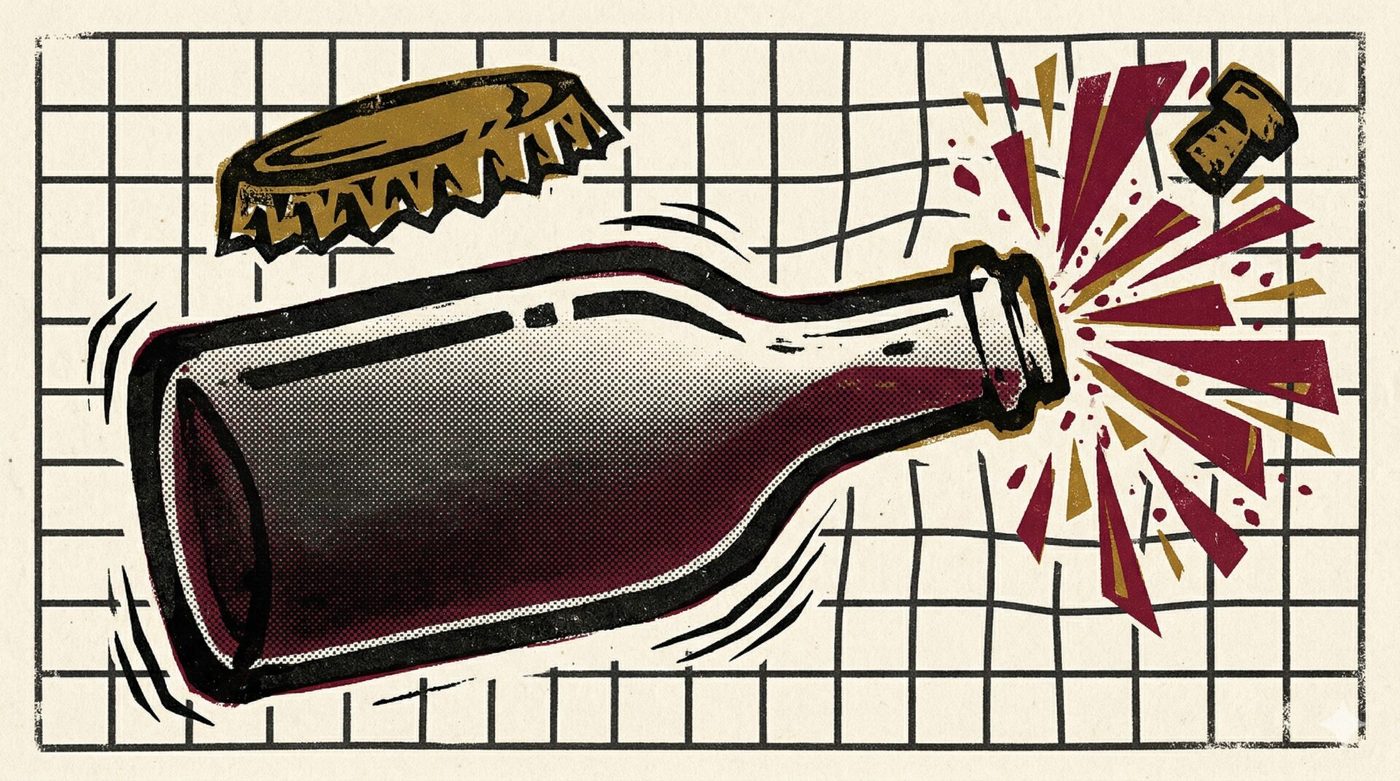
It arrives in a hazy, gently fizzing bottle with a crown cap and a hand-drawn label. It tastes like something between cider and wine, with bubbles that feel soft and alive. Welcome to pét-nat, the wine world’s most talked-about style, which hardly any supermarkets stock.
Pét-nat is short for pétillant naturel, French for “naturally sparkling.” It is one of the oldest methods of making sparkling wine, yet it has become a symbol of the natural wine movement. Understanding it means understanding a little about how sparkling wine gets its bubbles, and why some winemakers are choosing the most hands-off route possible.
How Pét-Nat Gets Its Bubbles
All sparkling wine gets its bubbles from carbon dioxide, a byproduct of fermentation. The question is where that fermentation happens.
Most sparkling wines, including Champagne, ferment once to make still wine, then undergo a second fermentation to create bubbles. Pét-nat skips the second fermentation entirely. Instead, the winemaker bottles the wine while the first fermentation is still underway. The remaining yeast continues to eat sugar inside the sealed bottle, producing CO₂ that dissolves into the wine.
This method is called méthode ancestrale, the ancestral method. It predates the traditional Champagne method by centuries. When fermentation finishes, there is residual yeast in the bottle, which is why most pét-nats are cloudy. Some producers disgorge the sediment, but many leave it.
What Does Pét-Nat Taste Like?
Pét-nat defies easy description because no two bottles are quite alike. That said, common characteristics include:
Soft, creamy bubbles, lower pressure than Champagne or Prosecco, more like a gentle sparkle than aggressive fizz
Slight haziness, from residual yeast unless disgorged
Funky, yeasty notes, bread dough, apple skin, cider-like aromatics
Often off-dry, depending on when fermentation stopped, residual sugar may remain
Low sulphites, most pét-nats are made with minimal or no added SO₂
Relatively low alcohol, typically 10–12% ABV, sometimes lower
White pét-nats tend to show citrus, green apple, and floral notes. Rosé versions often taste of strawberry and cranberry. Orange pét-nats (from skin-contact white wine) can be more tannic and complex.
Where Does Pét-Nat Come From?
The méthode ancestrale has deep roots in France. The oldest documented sparkling wine in the world, Blanquette de Limoux from the Languedoc, was made this way in the 16th century, before Dom Pérignon was even born.
Other traditional French examples include Clairette de Die (from the Drôme valley) and Gaillac Perlé. These are still produced using ancestral method rules today.
But the modern pét-nat revival is global. Natural wine producers across the Loire Valley, Austria, Italy, Australia, South Africa, and the United States have embraced it. The style suits their ethos: minimal intervention, no dosage, no disgorgement required, and an expression of whatever the vintage gave them.
Pét-Nat vs Champagne vs Prosecco
To understand what makes pét-nat different, it helps to place it alongside the two most familiar sparkling styles:
Champagne uses the méthode champenoise (or traditional method): two separate fermentations, extended ageing on lees, disgorgement, and dosage. The result is precise, controlled, and consistent. Pressure is high (around 6 bar).
Prosecco uses the Charmat method: the second fermentation happens in a pressurised tank rather than individual bottles. It is faster, cheaper, and produces fresh, fruit-forward wine. Pressure is typically 3–3.5 bar.
Pét-nat has one fermentation, is bottled mid-process, has no disgorgement (usually), no dosage, and lower pressure (1–2.5 bar). It is the least controlled of the three, which is exactly the point for the producers who make it.
What Grapes Are Used?
Almost anything. That is part of pét-nat’s appeal: there are no rules governing what grape can be used, no appellation system requiring a specific variety. You will find pét-nat made from:
Chenin Blanc (Loire Valley)
Gamay (Burgundy and elsewhere)
Riesling (Germany, Alsace)
Grüner Veltliner (Austria)
Glera (Italy, though not Prosecco-labelled)
Gewürztraminer, Pinot Grigio, Pinot Noir
Indigenous and obscure varieties you may never have heard of
The grape matters less than the philosophy. Pét-nat is about capturing a fermentation in progress, not about hitting a flavour profile.
Why Is Pét-Nat Associated With Natural Wine?
Pét-nat fits the natural wine ethos almost perfectly. The ancestral method requires no added yeast (native fermentation only), no fining or filtration, no second fermentation additives, and minimal sulphites. The wine makes itself, more or less, the winemaker has to pick the right moment to bottle.
Natural wine producers are also drawn to pét-nat’s unpredictability. Each vintage is different. Each bottle may vary slightly. The haziness and the occasional sediment are features, not flaws.
That said, not all pét-nats are natural wine. Some conventional producers make ancestral method sparkling wine with added sulphites and controlled fermentation. The method and the philosophy are distinct, even if they often travel together.
How to Drink Pét-Nat
A few practical tips:
Chill it well. Serve at 8–10°C. Cold temperatures keep CO₂ in solution and mute any Brett or volatile acidity that some pét-nats carry.
Open carefully. There is less pressure than in Champagne, but the crown cap (used by most producers) can still foam. Wrap it in a cloth and open it over a sink or glass the first time.
Swirl before pouring or leave the lees. Some drinkers swirl the bottle gently to distribute the sediment evenly through the wine. Others pour carefully and leave the lees in the bottom, both are valid.
Drink it young. Most pét-nats are not made for ageing. The freshness and live quality are the point. Drink within one to two years of the vintage, ideally sooner.
Food pairing. The low alcohol, slight sweetness, and acidity make pét-nat remarkably versatile. It works beautifully with charcuterie, light cheeses, oysters, sushi, and anything fried. It also makes an excellent aperitif on its own.
Why Some Pét-Nats Go Wrong
Because fermentation is live and unpredictable, pét-nat carries real risk. A bottle that still had active yeast when it was sealed can continue fermenting, building pressure beyond what the winemaker intended. The result can be:
Excessive foam when opened (gushing)
Higher-than-expected sweetness or dryness, depending on when fermentation stopped
Off-flavours from unstable fermentation or Brett contamination
Inconsistency between bottles of the same batch
This variability is why some wine drinkers love pét-nat (every bottle is an adventure) and others avoid it (reliability matters). If you are new to the style, buy from a reputable natural wine shop that can vouch for the producer’s track record.
Notable Pét-Nat Producers to Know
The pét-nat scene is wide and growing, but a few names appear consistently in serious natural wine circles:
Domaine de la Taille aux Loups (Loire), benchmark Montlouis pét-nat from Chenin Blanc
Christian Tschida (Austria), precise, elegant pét-nats from Burgenland
Gut Oggau (Austria), biodynamic estate with expressive sparkling wines
Clairette de Die producers (Rhône), the traditional, appellation-controlled version
Borachio (Australia), part of a thriving Australian natural wine scene producing excellent pét-nat
Your local natural wine importer will likely have regional options that are just as interesting, and often better value than imported bottles.
Read Also
More on Wine Guide

What Is Natural Wine, Really?
Natural wine means everything and nothing at once. Here's what's actually behind the label and how to taste through the marketing.
Read on →Pouilly-Fuissé Mastered: From 101 to Expert
Discover Pouilly-Fuissé in depth: from terroir and winemaking craft to tasting notes of 14 top wines from southern Burgundy.
Read on →Pouilly-Fuissé 101: Burgundy's White Wine Gem
Pouilly-Fuissé is a prestigious white wine from the Mâconnais in southern Burgundy. Made exclusively from Chardonnay, it offers terroir-driven elegance.
Read on →